All Posts By

emilyh

Eyes in the Sky

By | Uncategorized

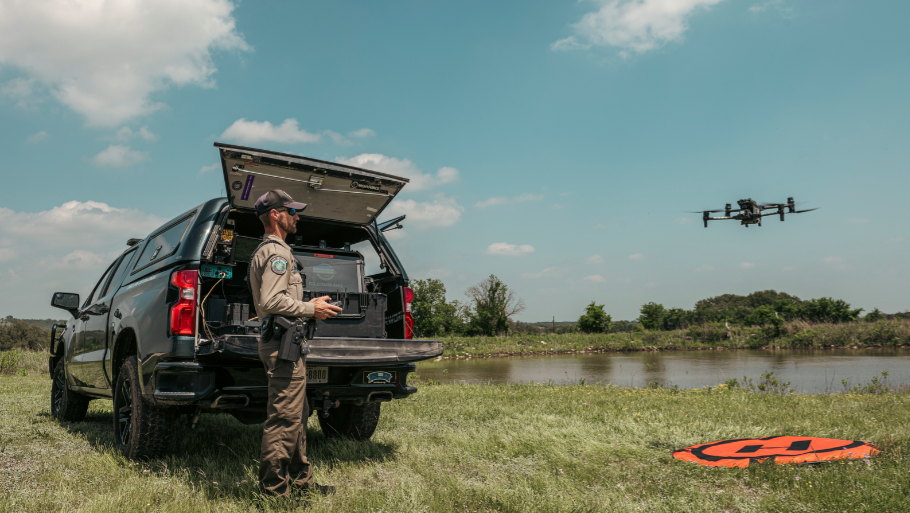
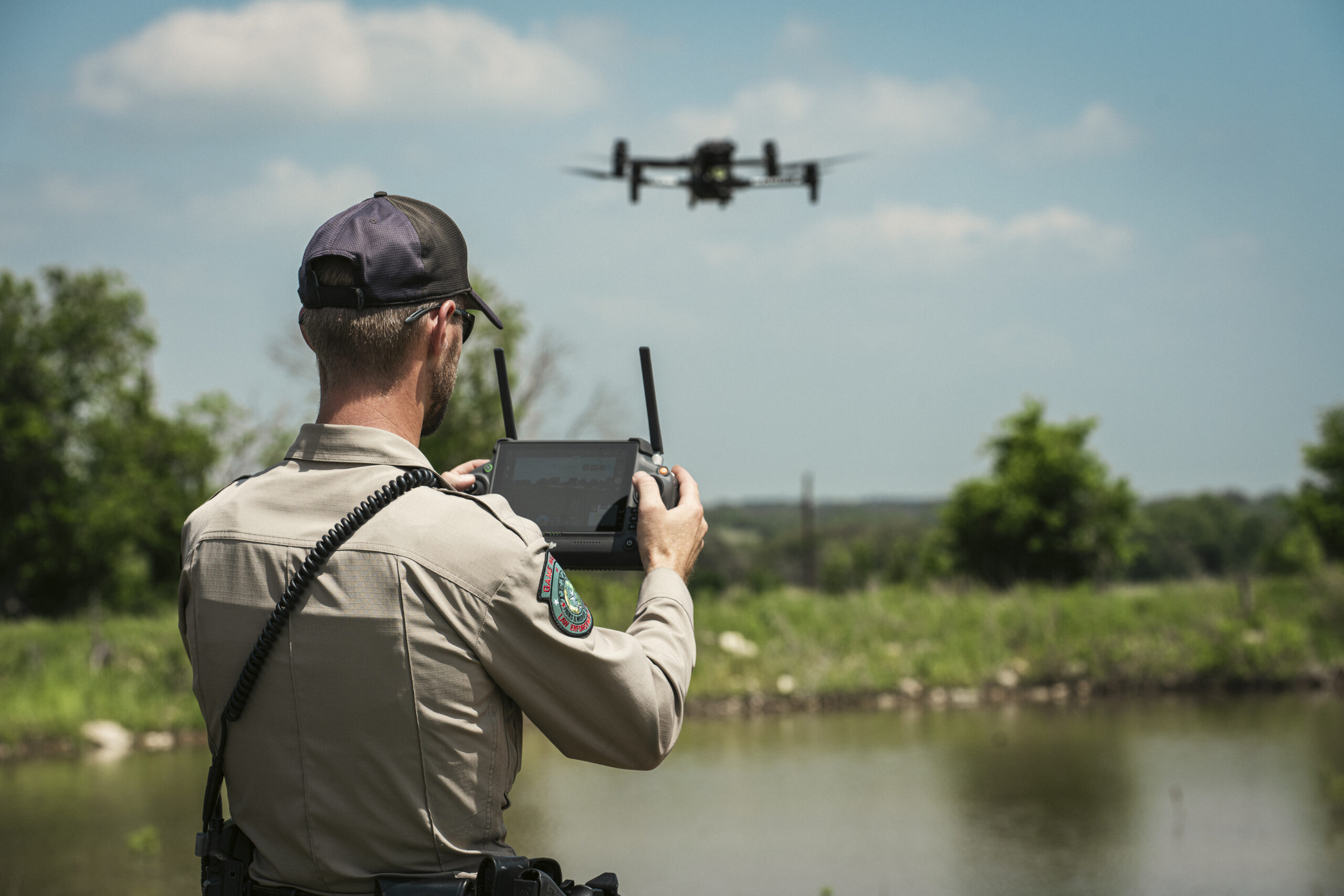
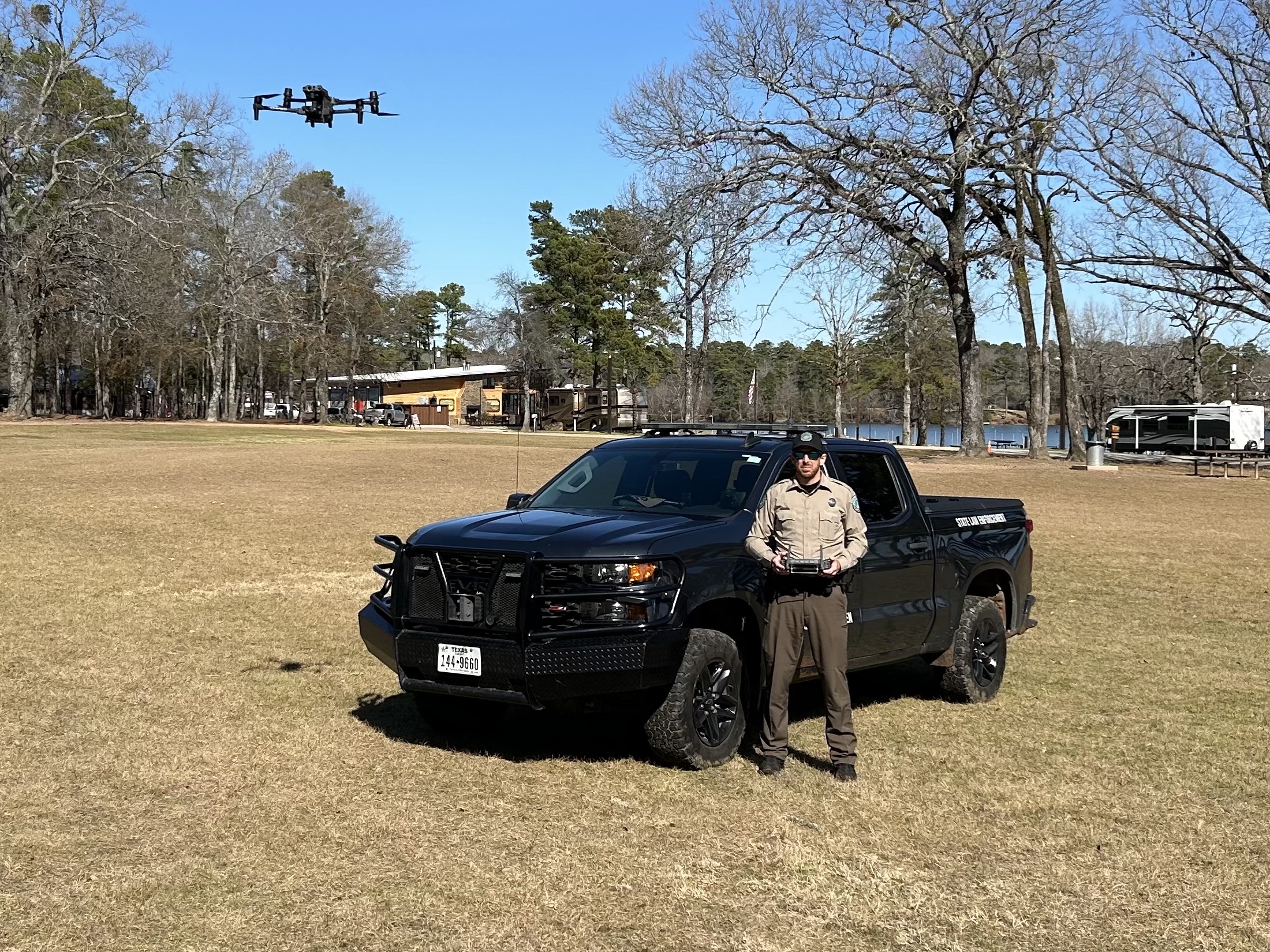
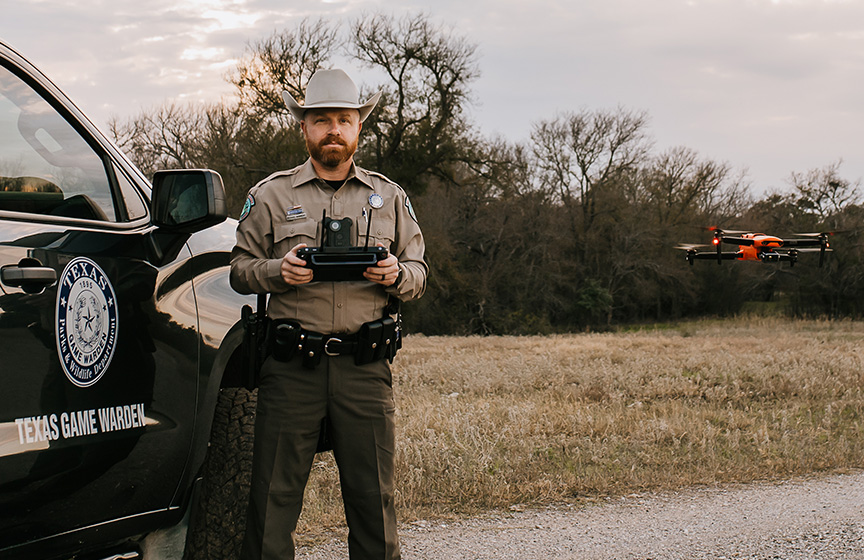
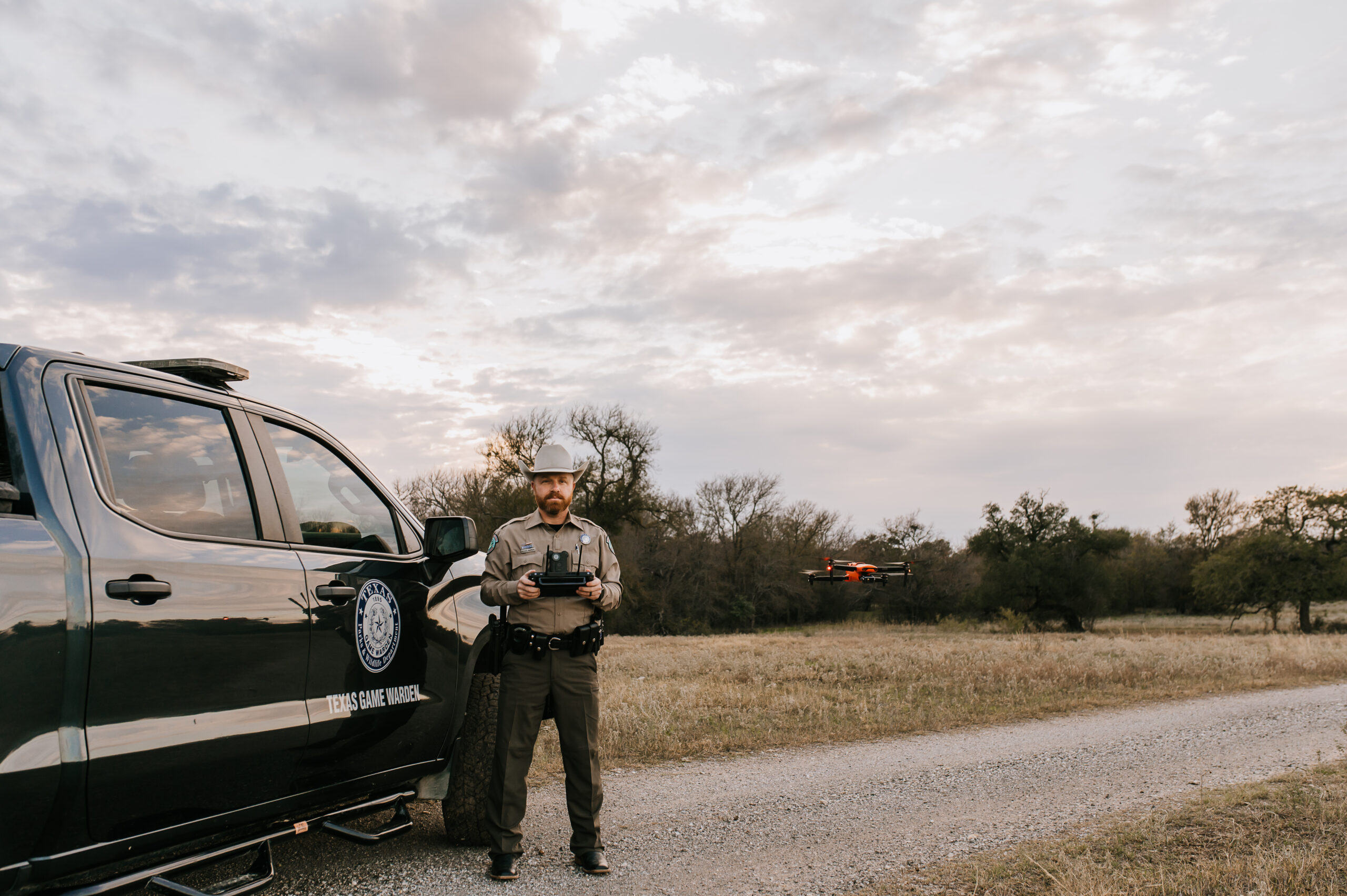
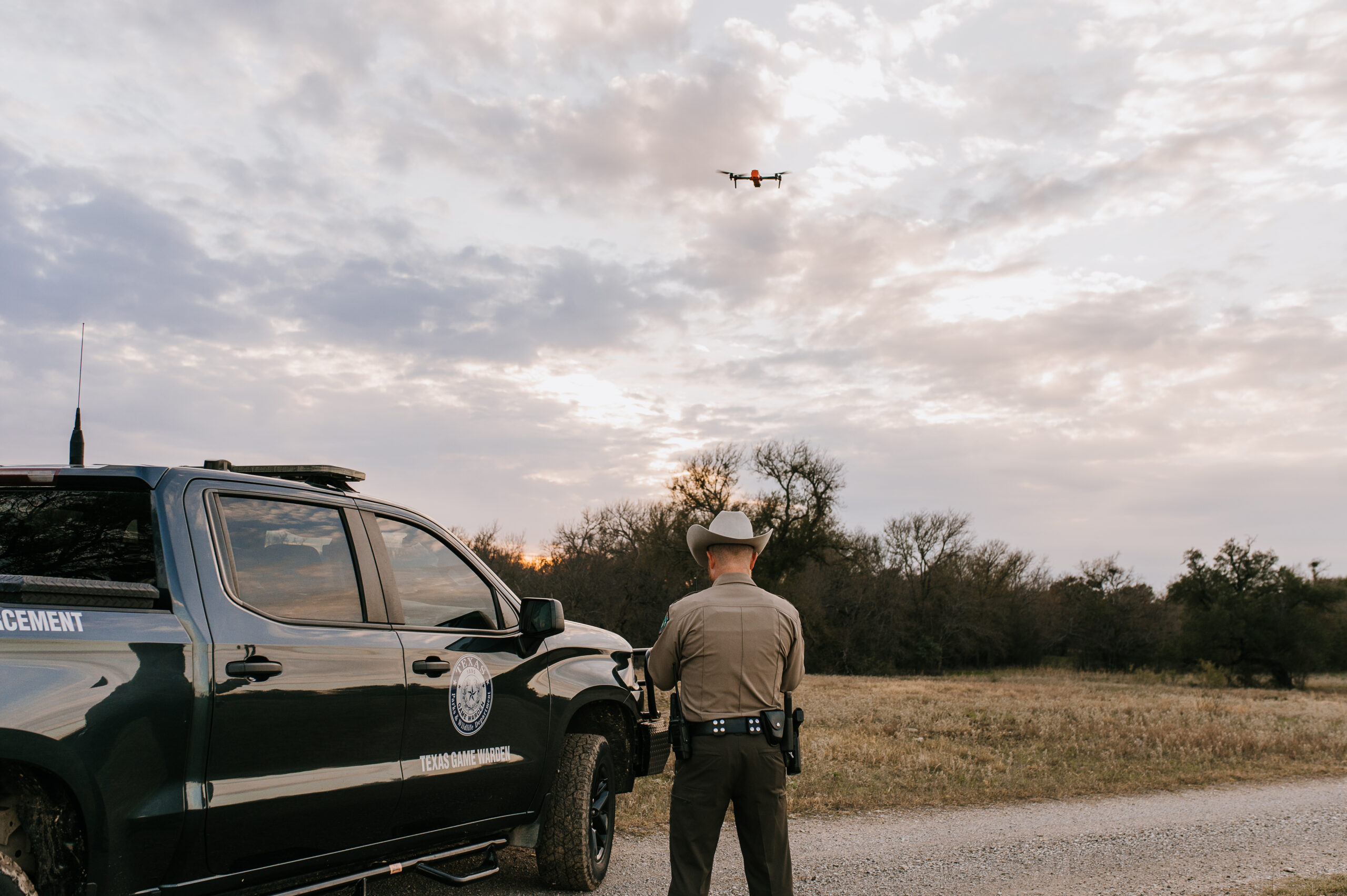
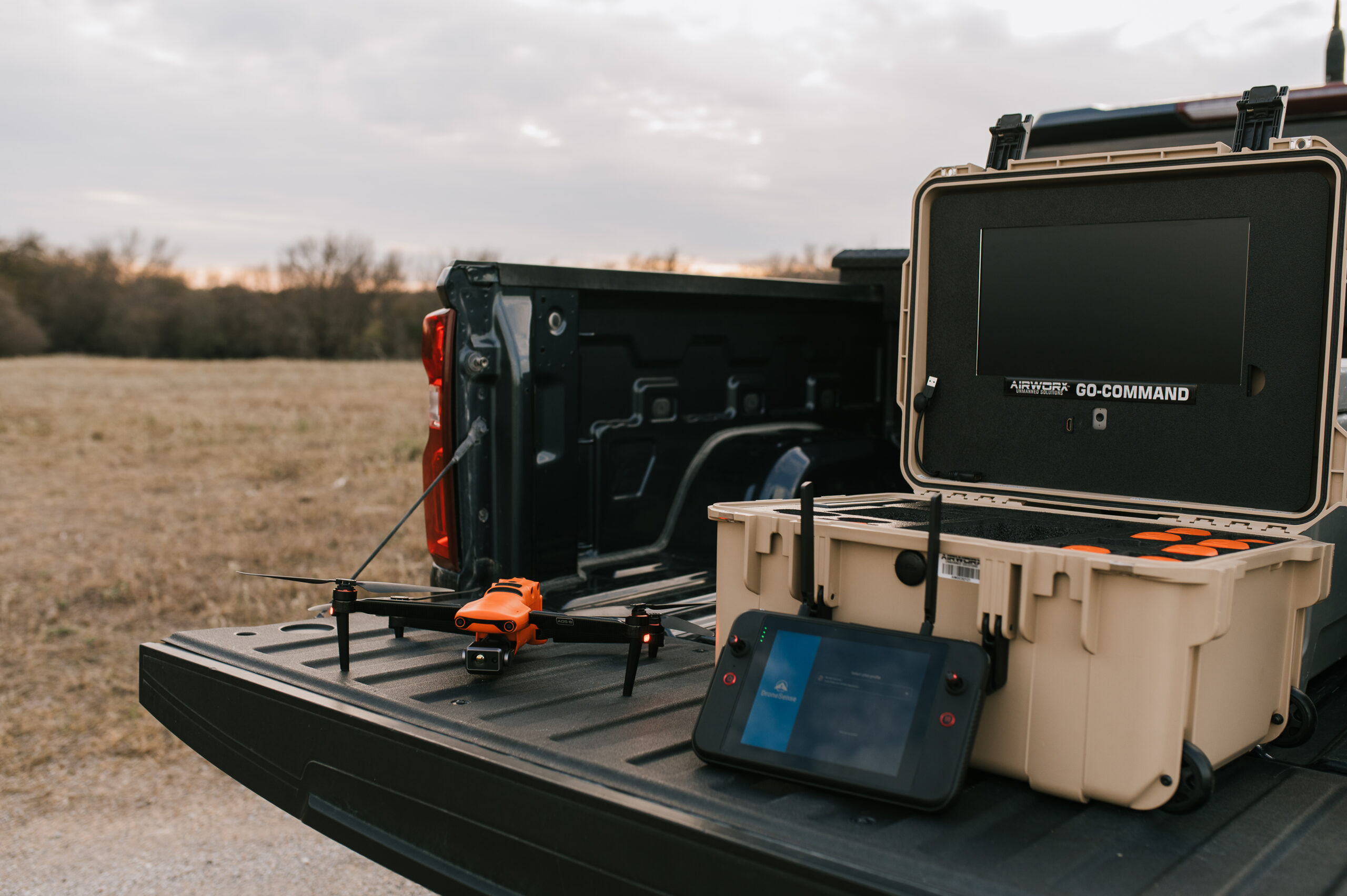
When floodwaters raged through Central Texas on July 4, 2025, Texas Game Wardens used Unmanned Aircraft Systems (UAS)—or drones—to save lives and bring critical clarity in the middle of chaos. What seemed extraordinary that day was the result of years of steady investment and training in a program that has transformed how Texas responds to disasters.

The Texas Parks and Wildlife Department’s Law Enforcement Division first tested drones in 2018. At the time, it was a small trial run, with just a handful of game wardens trained to fly aircraft that were still considered experimental in law enforcement. Lt. Matthew Bridgefarmer was there from the beginning.

“The program went live in 2018 as a test, really just a trial balloon,” Lt. Bridgefarmer recalled. “We started with about a dozen pilots and one drone. Within a year, it had grown to every region of the state, including park police. We went from that handful of pilots to around 60 statewide.”

The original focus was search and rescue. The goal was simple: to get eyes in the sky quickly and find people faster. Even in its infancy, the program showed how powerful that could be. Texas Game Wardens have used drones to locate missing people in hard-to-reach areas, scout swift water hazards before boat teams entered dangerous currents, and even deliver life jackets to people caught in the crosshairs of dangers currents.

Nearly 90 percent of the active fleet has been funded through Texas Parks and Wildlife Foundation’s S. Reed Morian Gear Up for Game Wardens program. What began as a handful of donated drones has grown into a sophisticated statewide capability that has changed how Texas Game Wardens do their work.

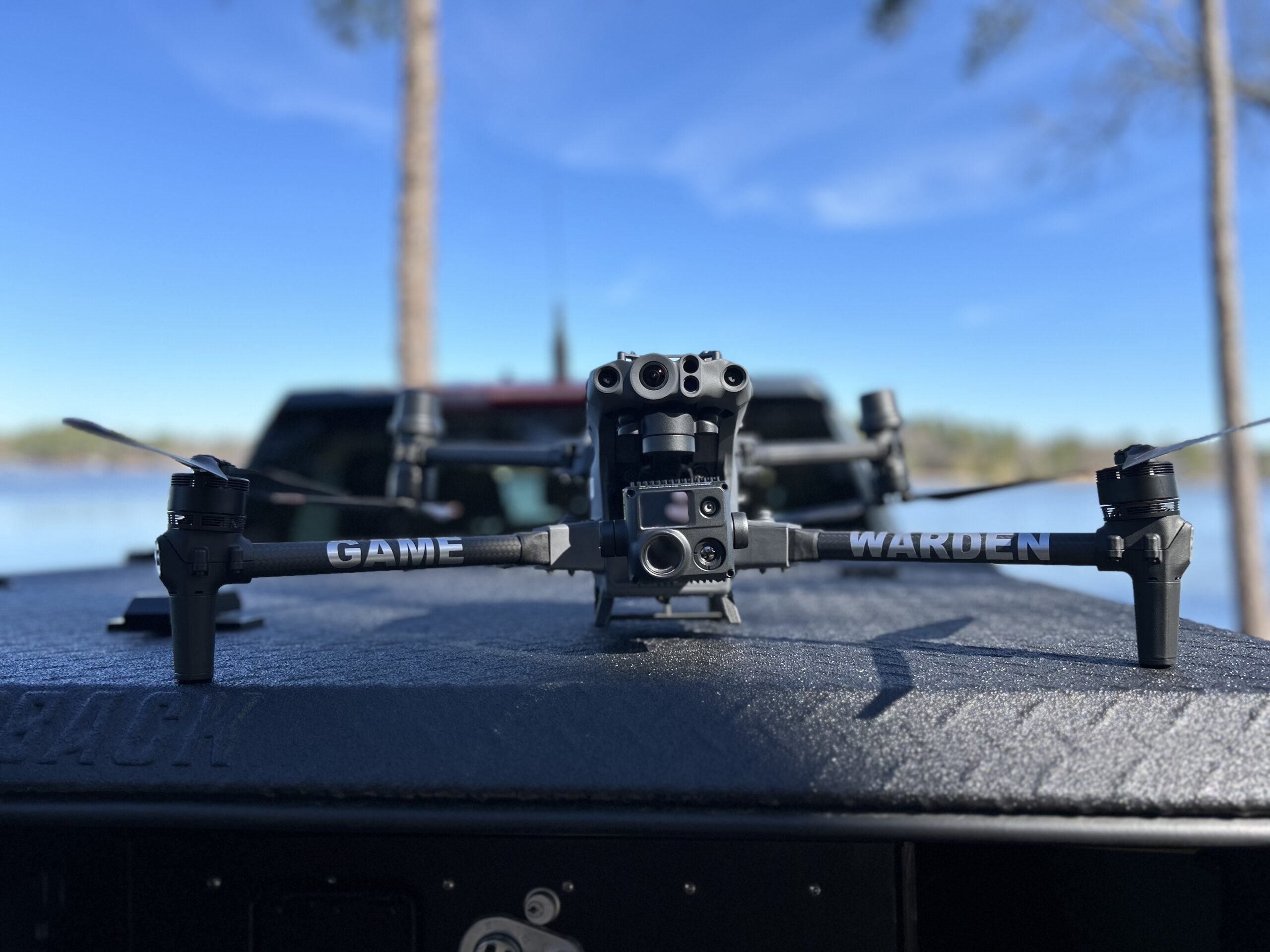
“Today we have a fleet of roughly 75 active drones and 50 trained pilots,” Lt. Bridgefarmer said. “They range from small drones that can fly inside a collapsed structure to large models that can carry payloads. That growth and the quality of our equipment would not have happened without Gear Up for Game Wardens. We wouldn’t be where we are as a program without it.”

Philanthropy has been central from the very beginning. “When we first started Gear Up, we knew it could make a difference, but I don’t think any of us imagined just how far it would go,” said Randy Fowler, an early supporter of the program and current TPWF trustee. “Seeing these drones save lives, seeing the gear in action when it matters most—that’s why we do this.”

“For the dollar, drones are probably one of the most impactful pieces of equipment in the Gear Up for Game Wardens program,” Fowler added. “It’s incredibly rewarding to know our support is helping game wardens do their job safer, faster, and better.”

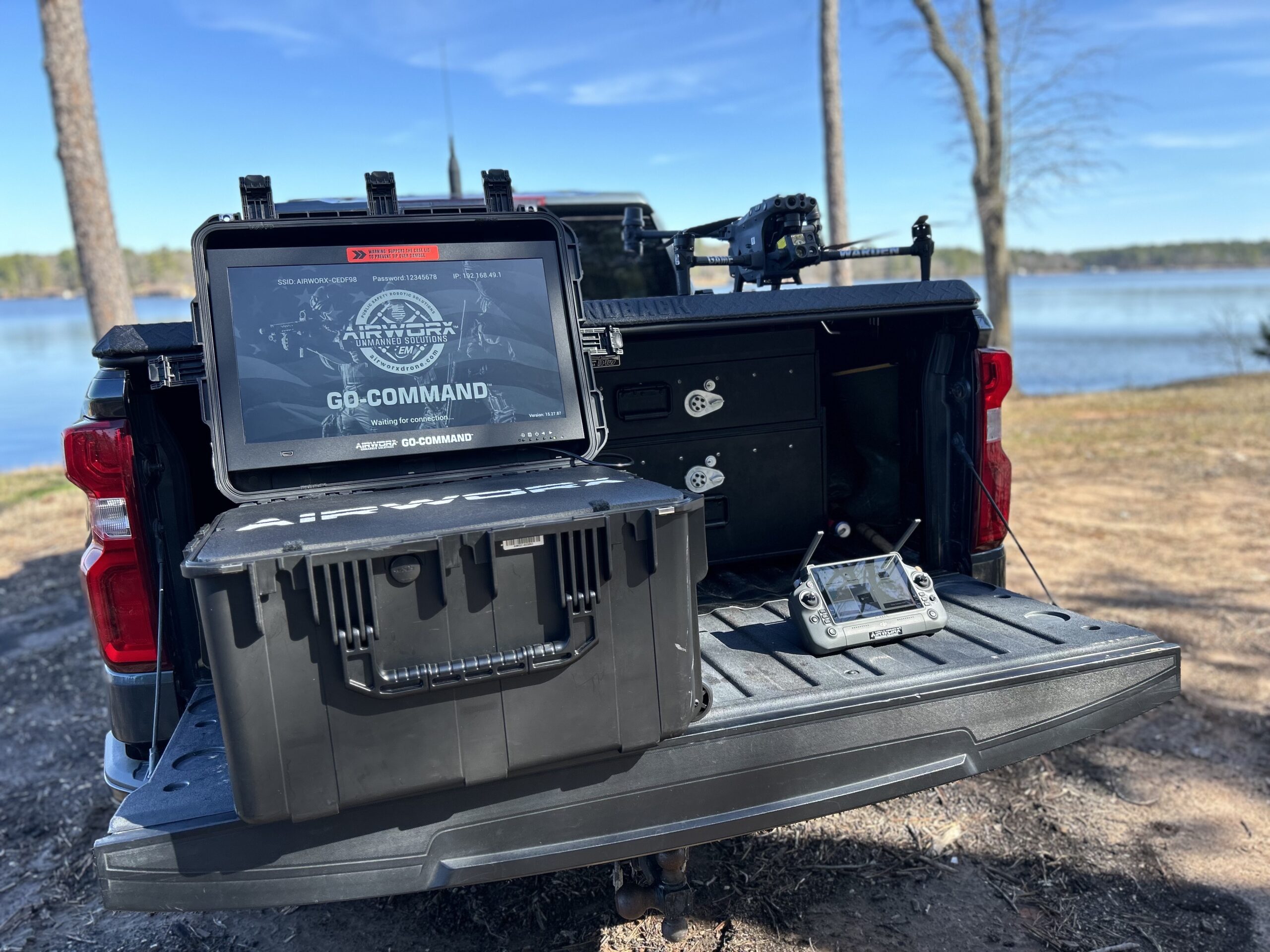
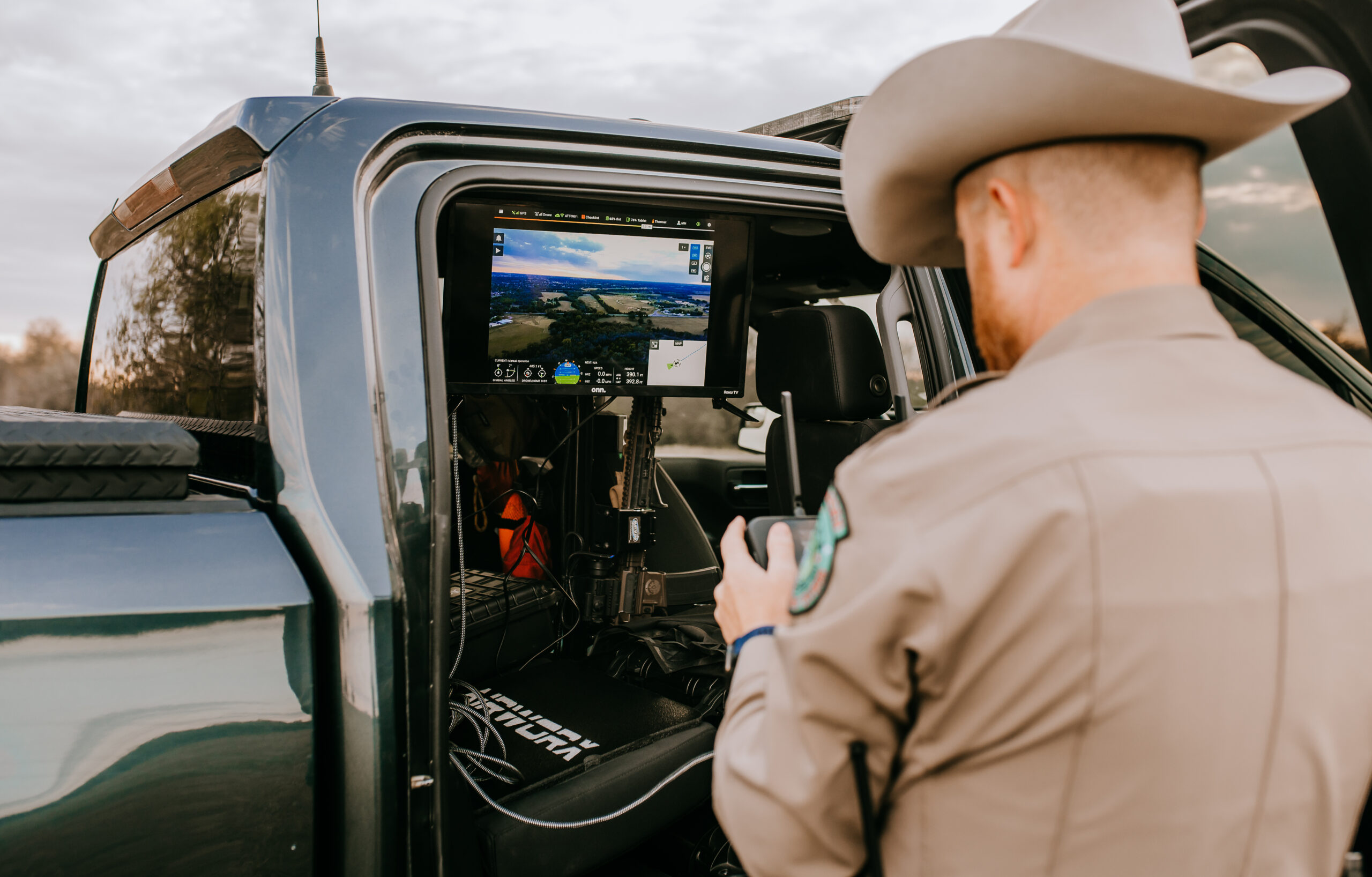
The drone Fowler helped fund was quickly put to use, and his support inspired others to follow. In the years since, Gear Up donors have funded dozens more, along with batteries, cameras, handheld thermal imagers, and mobile command kits that allow drones to stream live video directly to incident command. That capacity has given Texas Game Wardens new tools to protect Texans during floods, fires, hurricanes, and myriad situations that pose a danger.

The July 4 floods were a striking example of how far the program has come. Drones were flown across multiple river systems to guide boat teams, scout debris fields, and provide real-time situational awareness to command posts. At times, more than 20 live video feeds were streaming into the state’s operations center. One drone dropped a life jacket to a woman clinging to her rooftop, the first aerial delivery of its kind in Texas. At Camp Mystic, a drone was used to help guide helicopters and coordinate the evacuation of hundreds of campers and staff.

Lt. Bridgefarmer said the program’s success is not just about technology, but about training and teamwork. “We focus on mastering the basics so we can integrate with other units—swift water rescue teams, K-9 units, aviation, even SWAT,” he explained. “We train alongside them so that when an event happens, the communication is seamless and the integration is natural. That’s why it worked as well as it did on July 4.”

The equipment itself continues to evolve. Lt. Bridgefarmer has his eye on vertical takeoff fixed-wing drones that could stay in the air longer, cover more ground, and map wide areas more quickly. Heavy-lift models that can carry larger payloads, like cases of water or medical supplies, are also on the horizon. Those advances could make a profound difference in both search and rescue and disaster relief.

Since 2017, Gear Up for Game Wardens has provided more than $7 million in gear, and the drone program stands as one of its most visible successes. What began as a single donated aircraft has become a statewide system that is saving lives and shaping the future of law enforcement response in Texas.

For Lt. Bridgefarmer, the program is as personal as it is professional. “You don’t realize the extent that this equipment saves lives until you see it in action,” he said. “Without Gear Up, we simply would not have been able to do the work we’ve done.”

The sight of a drone hovering over a flood, fire, or search scene has become a familiar one in Texas. Those eyes in the sky represent more than technology. They represent a partnership between dedicated game wardens and generous Texans who believe in equipping them to serve. And as future disasters unfold, this galvanizing partnership will continue to shape how Texas responds.

Texas Game Wardens Answer the Call

By | Uncategorized

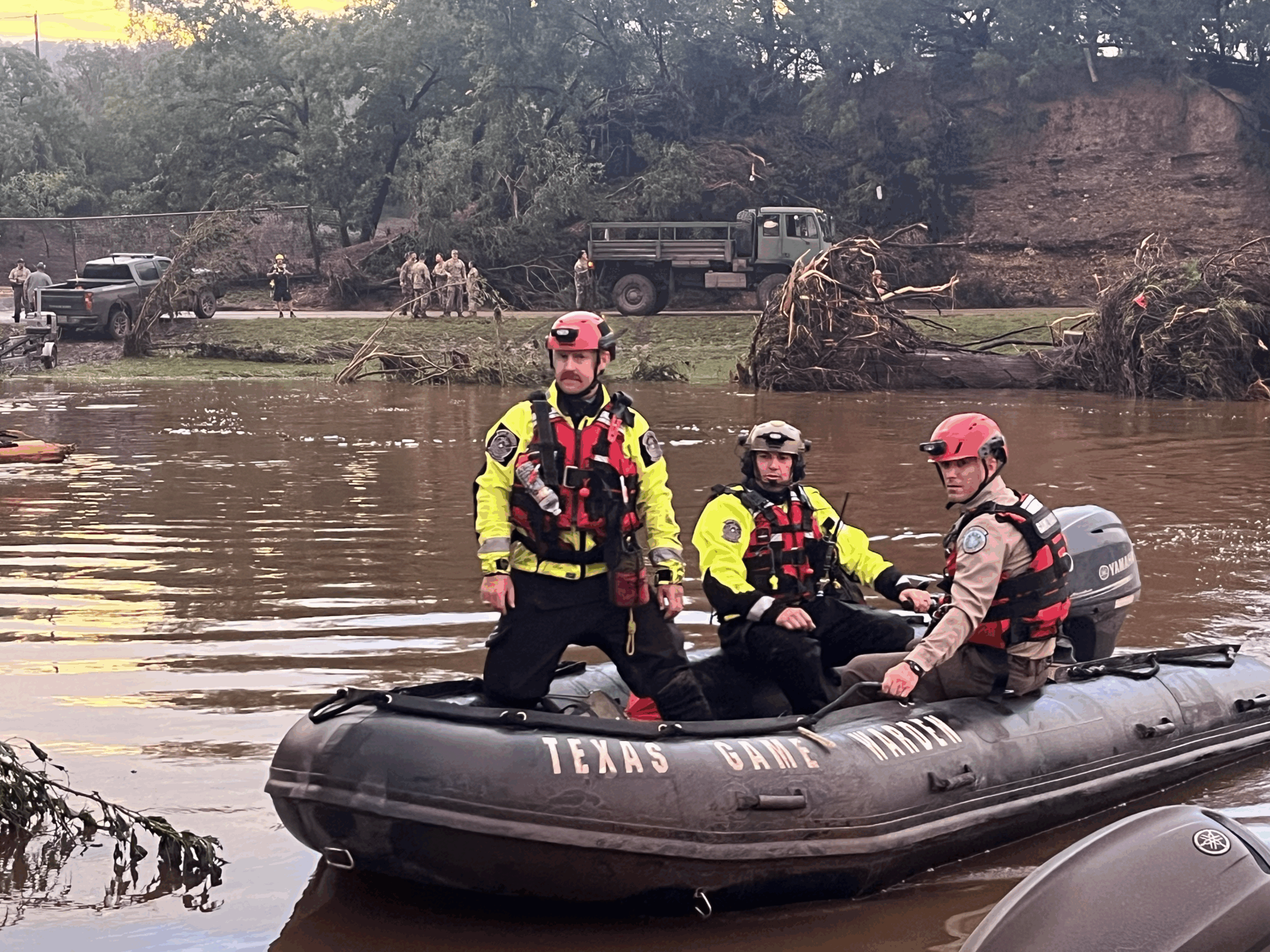
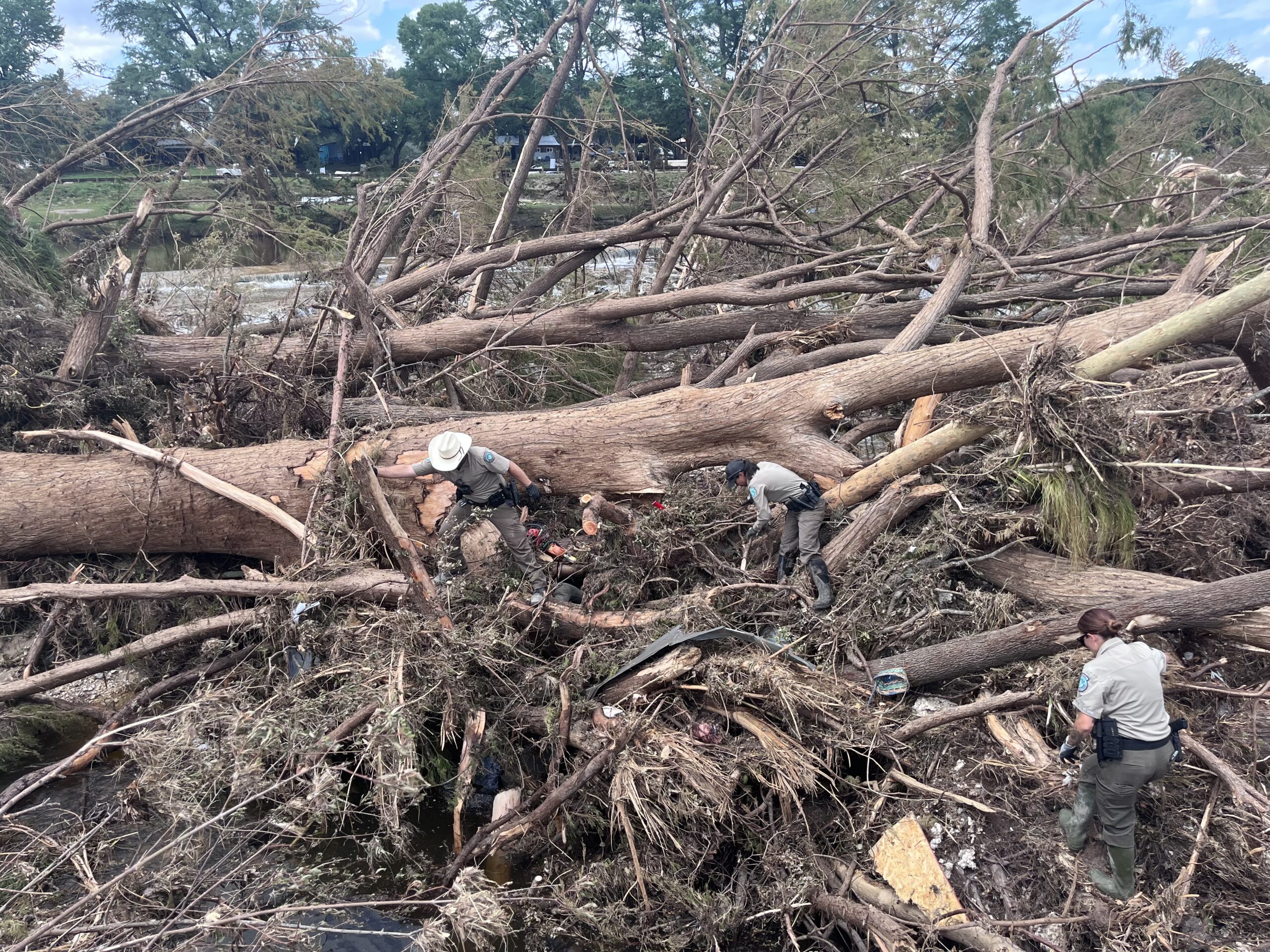
When historic flash floods swept across Central Texas on July 4, 2025, first responders across the region sprang into action. Texas Game Wardens, local fire departments, sheriff’s offices, DPS, and rescue teams mobilized to confront a disaster of staggering scale. Rain fell in relentless sheets, rivers surged over their banks, and entire towns were cut off within hours. Over the coming days and weeks, we’d come to realize that at least 135 Texans had lost their lives—a profound, devastating loss that could have been much higher if it weren’t for the urgent, coordinated frontline efforts of emergency responders.

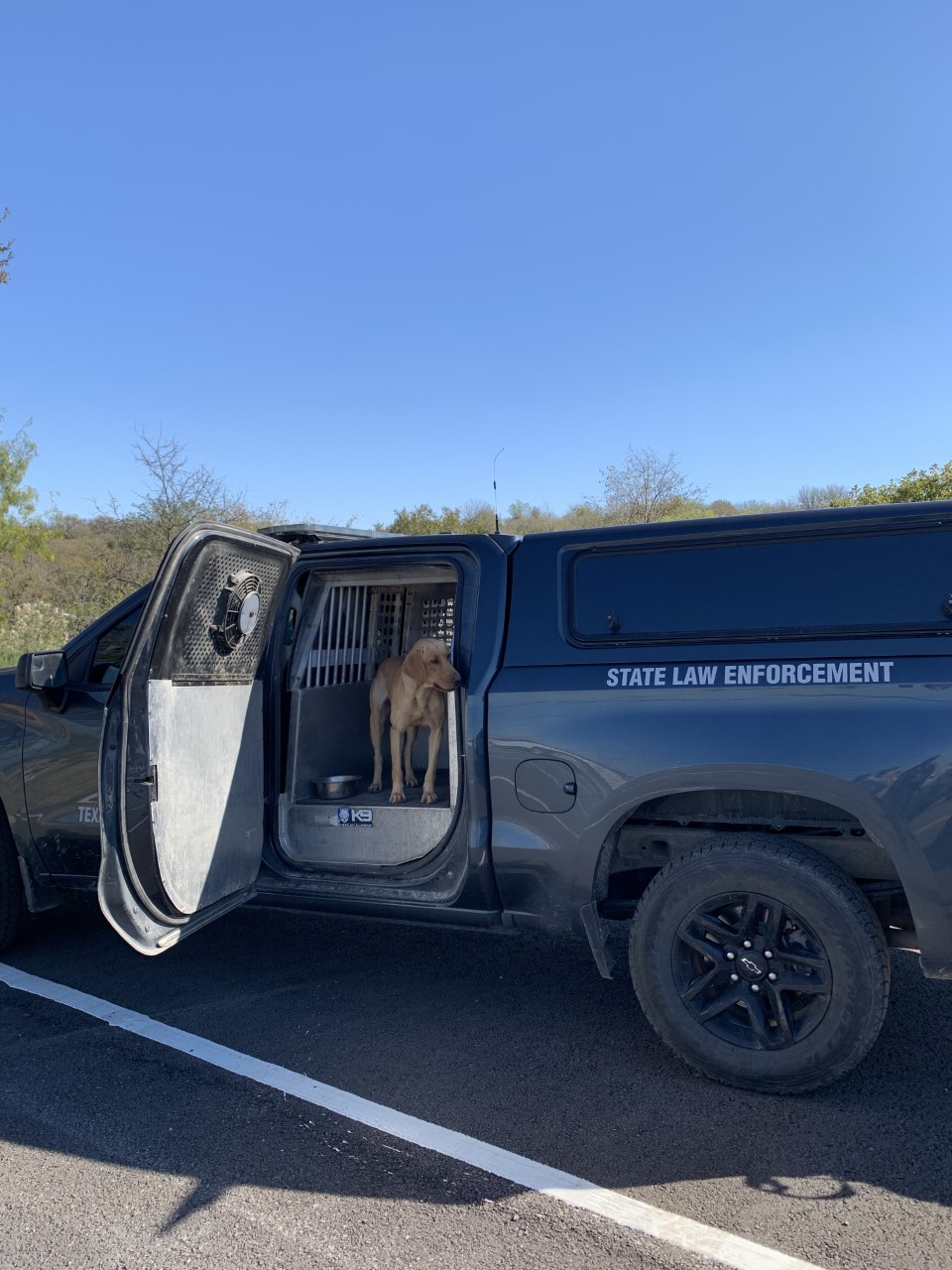
Texas Game Wardens played a critical role in the effort. As fully commissioned peace officers with statewide jurisdiction, they bring a rare blend of law enforcement authority and search and rescue expertise. Trained to operate in the harshest conditions and equipped with boats, helicopters, K-9 units, and specialized tactical teams, they are often the first on the front lines when Texas faces natural disasters.

During the disaster, more than 375 game wardens and 475 specialized assets were deployed across multiple river systems, from the Guadalupe to the San Gabriel. They conducted 34 water rescues, evacuated 434 individuals, and assisted countless others stranded by rising water. They also provided early logistical support to local agencies and DPS in what became one of the largest mobilizations in the division’s history.

“It was an all-hands effort,” said Capt. Logan Griffin. “From swift water boats to boots on the ground, we were fully engaged. But it wasn’t just us—it was a true team response across agencies.”

Behind those numbers are stories of courage, quick thinking, and extraordinary teamwork. One of the most dramatic missions unfolded at Camp Mystic, a summer camp near Hunt that was suddenly cut off by floodwaters. With no power, no cell service, and hundreds of children and staffers stranded, Texas Game Warden Dusty Jansky was airlifted into the camp by a TPWD helicopter along with a swift water rescue technician. Rain was still falling and debris choked every road.

His task was to provide critical communications and situational awareness while guiding efforts to evacuate campers. Working with camp staff and other responders, Jansky helped coordinate the air evacuation of more than 160 campers to reunification centers. Game wardens transported another 170 by vehicle once debris was cleared from the roads.

For Jansky, the day was a blur of tasks: running communications, relaying information to ground teams, and directing resources where they were needed most. He worked nearly 20 hours before collapsing into bed after midnight. “It’s a day I’ll never forget,” he said. “We can wash the mud off our trucks and out of our uniforms, but we’ll never get it out of our hearts or off our minds.”

The flood didn’t just test the training of Texas Game Wardens—it also tested their equipment. Much of what they relied on came through Texas Parks and Wildlife Foundation’s S. Reed Morian Gear Up for Game Wardens program. In the days immediately following the disaster, Gear Up worked quickly to replenish what had been lost or damaged. Hundreds of new Sitka boots, gloves, and safety glasses, and dozens of prop blades for swift water boats were rushed to the Kerrville Law Enforcement Office, while additional equipment was ordered to keep pace with ongoing operations.

“Gear Up allows us to evolve at a much higher speed,” Griffin said. “This program puts the right tools in the hands of game wardens when they need them most.”

Since its launch in 2017, Gear Up has provided more than $7 million in equipment for Texas Game Wardens. The July 4 floods proved just how vital that investment has become—not only for the game wardens who risk their lives, but for the Texans they protect.

As Col. Ron VanderRoest, head of TPWD’s Law Enforcement Division, told lawmakers after the flood, “The dedication of our Texas Game Wardens reflects our commitment to public safety, resilience, and service.”

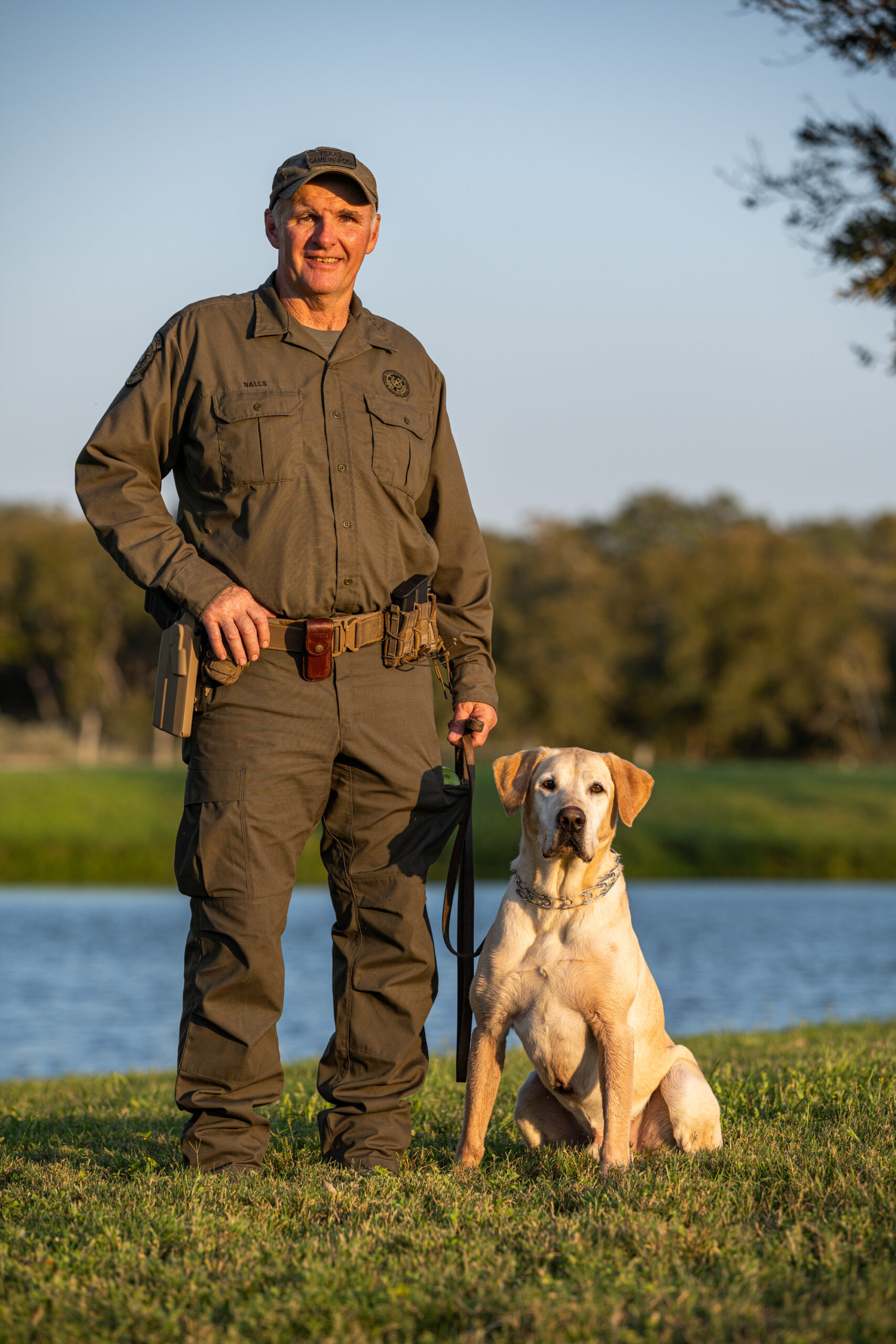
Meet Texas Game Warden Sergeant Derek Nalls

By | Uncategorized

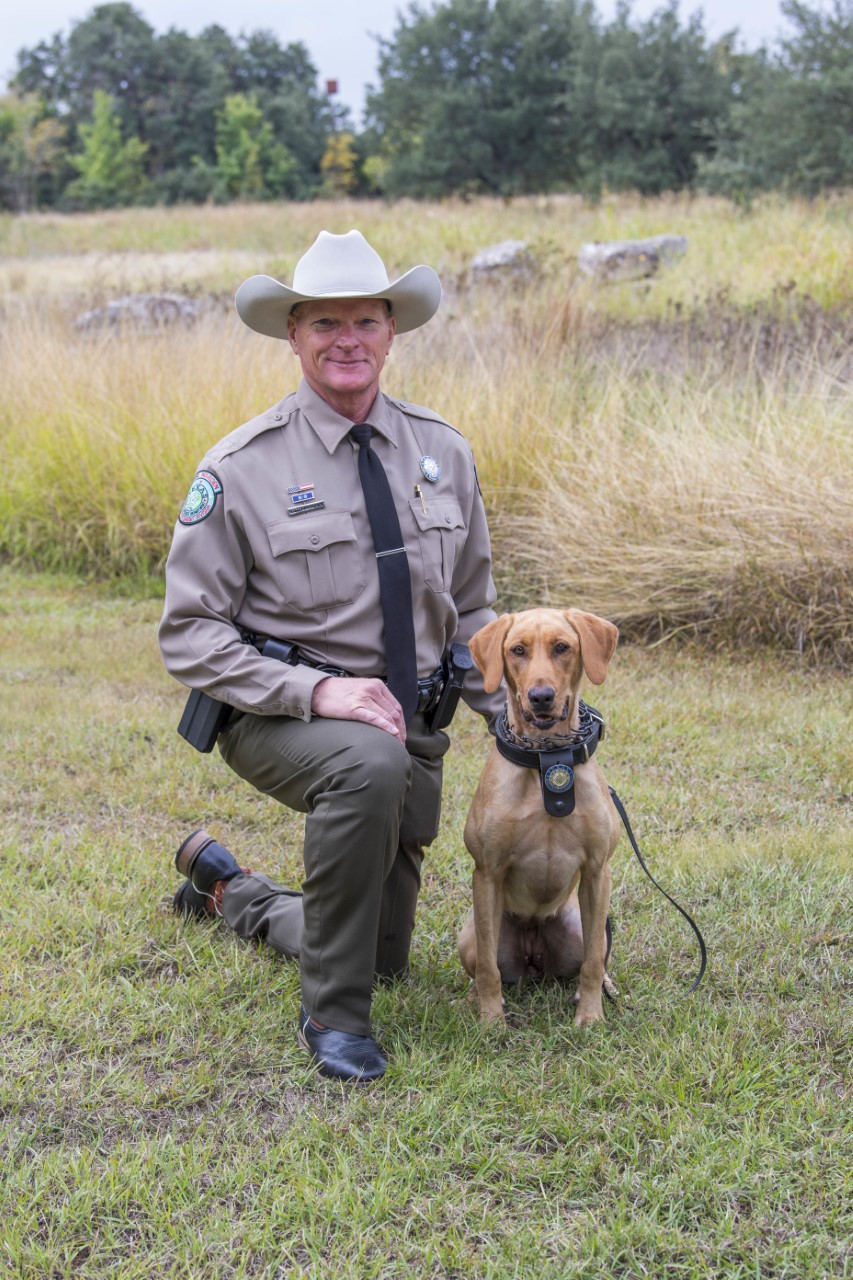
Sometimes it takes a second act to find your first calling. This was the case for Sergeant Derek Nalls, a Texas Game Warden and K-9 Handler who just recently retired after a rewarding 23-year career patrolling and protecting the lands, waters, wildlife, and people of Texas.

Ever since he can remember, Nalls wanted to be a Texas Game Warden, but life ultimately took him down a different path. “When I was 15, I spent my summers and weekends working for my uncle, a home builder. I became really good at it, but before you know it, 20 years had passed,” said Nalls. At 36 years old, he still couldn’t shake the dream of becoming a game warden, and with his wife’s unwavering support, he changed course. “I went back to college for my second degree, this time in criminal justice. I then applied for the Game Warden Academy. On my fourth attempt, I was accepted!”

At 40 years old, Nalls proudly earned his Texas Game Warden badge.  His early assignments took him across the state, from Harrison County to Shelby County, and eventually to far West Texas and the Panhandle before he made his final move to Nolan County. Here he embarked on a new mission—becoming a K-9 handler.

In 2013, Nalls was part of Texas Parks and Wildlife Department’s (TPWD) inaugural K-9 team. The first K-9 partner he trained was Woodrow, who was certified in narcotics detection, tracking, search and rescue, and article search. Together, Nalls and Woodrow answered hundreds of deployments, but his most memorable remains the very first time Woodrow located a missing person.

“I was called out to a school to help locate a ten-year-old student who ran away after getting in trouble. I turned Woodrow loose inside the building, and he hit upon a door that was cracked and began barking.” Thanks to Woodrow’s keen nose, the boy was found unharmed, hiding underneath a table. “He wasn’t so happy to be found because I think he knew he was in trouble, but it’s always a great feeling when you find someone alive and unharmed.”

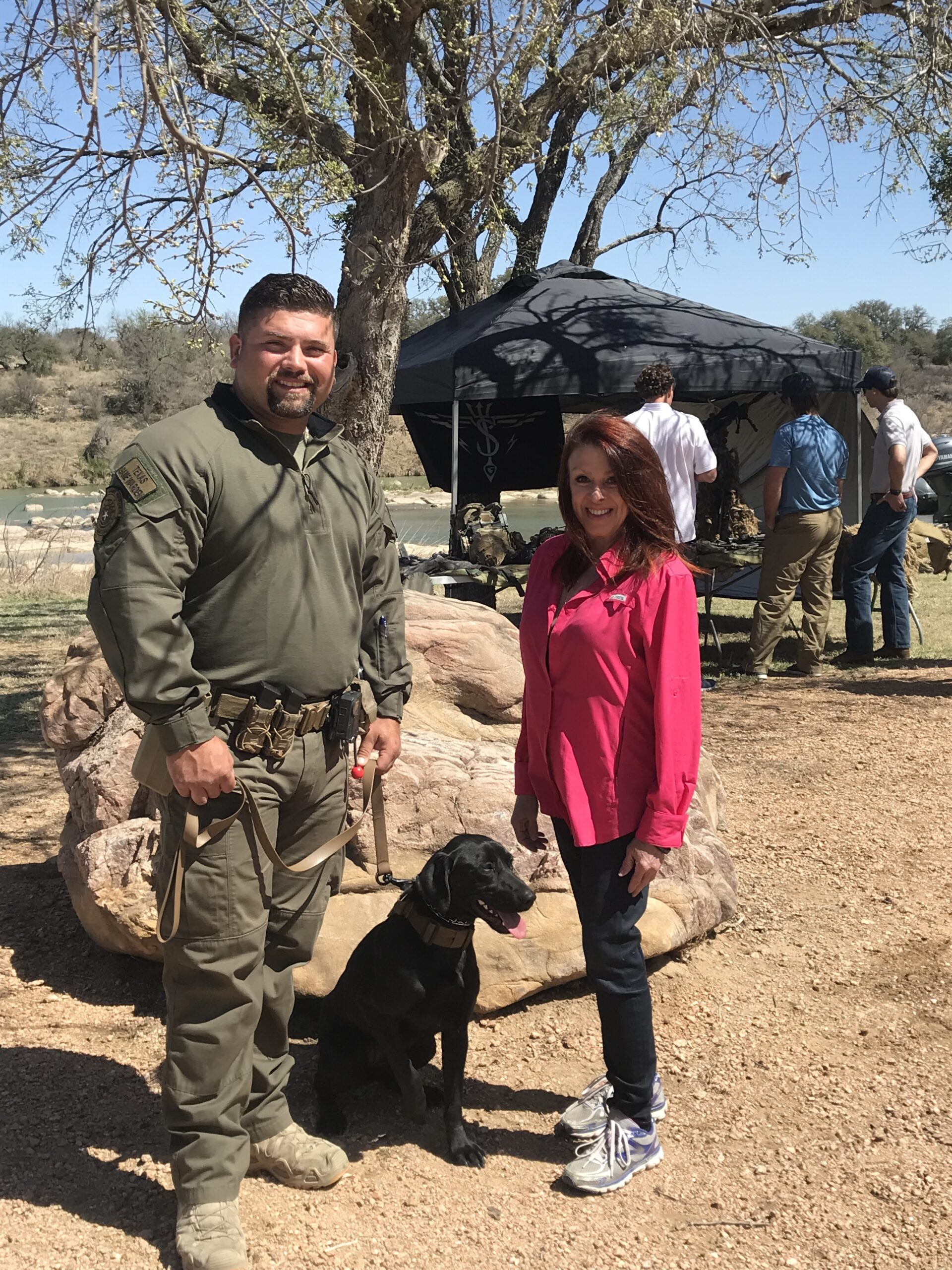
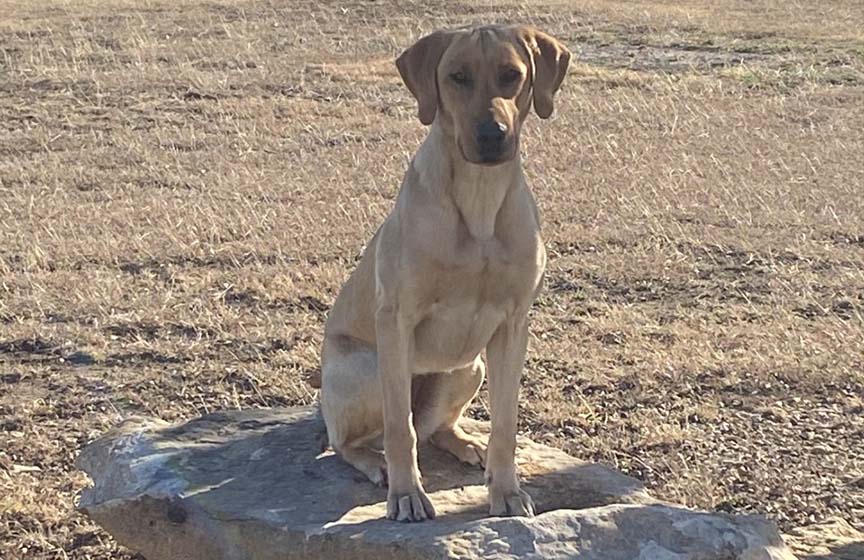
In 2021, with Woodrow set to retire, Nalls began training his second K-9 partner, Skye, a high-energy black labrador retriever who was later certified in firearms detection, tracking, and search and rescue. Together, they completed over 80 deployments, from search and rescue to assisting in border patrol operations and other critical missions.

One of Nalls most memorable missions with Skye was when the pair was deployed to Callahan County to help locate and missing man who had health issues. “Night was setting in, and we needed to find him fast,” recalled Nalls. Skye was able to determine the general direction of the man, which helped Texas Game Warden and Drone Operator Michael Hummert to narrow his search using a thermal drone. Hummert found a heat signature on his second sweep, and Nalls and Skye were able to descend upon the man’s precise location. “He was thirsty and scared, but he was going to be okay, which is the outcome everyone wants in the end.”

As Nalls begins his retirement, he looks forward to spending time with his wife of 34 years, and he plans to take a few cues from his trusted K-9 Woodrow, who has become quite the pro at retirement. “I’m looking out the door, and he is laying in the sun as we speak,” joked Nalls. Skye, newly retired and still full of energy, will also remain by his side as a cherished companion.

“There’s a saying we use in the field—it’s called ‘dropping the lead.’ It’s time for me to drop the lead and let the youngsters take over. I have a boat that hasn’t been cranked in two years. I want to go fishing. I want to hook up the travel trailer. It’s bittersweet, but I think I’ll find plenty to do.”

Donor Profile: Margaret Martin

By | Uncategorized

Margaret Martin grew up on a South Texas ranch near Laredo, and that experience connected her to nature in a way that inspired her lifelong commitment to conservation. She served on many local agriculture-focused boards before Governor Rick Perry tapped her to serve on the Texas Parks and Wildlife Commission in 2007, where she served until 2015.

“That changed my life,” she said. “I thought I had a good idea of what Texas Parks and Wildlife Department (TPWD) did, but I really had no idea of the vast scope of the Department’s purview until I served on the Commission. The incredible variety of things that TPWD does is amazing. From the network of state parks and wildlife management areas to the wildlife and fisheries biologists who help conserve our precious natural resources, and the wonderful men and women who serve as Texas Game Wardens, TPWD touches so many things that Texans hold dear.”

Martin has been a lifelong supporter of Texas Game Wardens, and in 2012, Martin led the charge on the Commission to support a K-9 unit in TPWD’s Law Enforcement Division.

“I was all in and thought it was a great idea,” said Martin. “What a great partner for the men and women who serve the people of Texas. These K-9s have abilities that humans don’t, and I was pleased to support the establishment of the first-ever K-9 team for Texas Game Wardens.”

Martin not only supported the concept, she also made a personal donation to TPWF to help make it happen. As the official nonprofit partner of TPWD, TPWF was instrumental in raising the private funds that turned the concept of a Texas Game Warden K-9 team into a reality.

In 2016, Martin joined TPWF’s board of trustees, where she is happy to continue supporting Texas Game Wardens and TPWD.

“Being a Texas Parks and Wildlife Commissioner before coming onto the TPWF board has given me a unique perspective in understanding how important Texas Parks and Wildlife Foundation is to the Department,” she said. “It’s a great partnership.”

In the first few years of the K-9 program, TPWF funds helped purchase dogs and paid for the necessary equipment and training for the dogs and their handlers. In 2017, TPWF launched the S. Reed Morian Gear Up for Game Wardens program, where funds raised keep the K-9 team running. In 2020, Gear Up established a dedicated fund to replace K-9s when they retire, which provides a seamless transition for the K-9 team. Martin has been a steadfast supporter of the K-9 program every step of the way.

“These amazing K-9s play a critical role in search and rescue operations that have literally saved lives, and they lead the way in a variety of missions across the state. They can do anything their handlers ask of them, and they are a great asset to the people of Texas. Plus, they’ve stolen my heart! I hope other Texans will join me in supporting Texas Game Wardens and their K-9 partners.”

Meet Texas Game Warden Brad Clark

By | Features

Brad Clark grew up near Houston and spent a lot of time hunting and fishing with his dad and granddad as a child. Although he thought it might be cool to become a Texas Game Warden when he grew up, he didn’t seriously pursue it.

“Everybody talked about how impossible it was to become a game warden, that hundreds would apply for just a few openings,” said Brad. “So, I set my sights on a more traditional career and initially pursued a business degree.”

After a couple of years of studying business management, he realized that a career cooped up in an office was not what he wanted to do.

“The second half of my college career was totally focused on the end goal of becoming a Texas Game Warden. I met as many game wardens as I could and went on ride-alongs to learn more about it.  I graduated from Stephen F. Austin State University in 2007 with a Wildlife Management degree.”

He didn’t get in to the first time he applied and went to work for the Texas Department of Corrections while keeping his eye on the prize. He made it as an alternate the second time he tried and started his training in 2010. He was commissioned as a Texas Game Warden with Texas Parks and Wildlife Department in July 2010, ready for the next chapter in his life.

The day he graduated and was pinned as a Texas Game Warden at the state capitol in Austin was one of the most momentous days of his life, made even more memorable by what also happened on that day.

“My girlfriend was with me that day along with my family and there were just a million things going on with the ceremony and everything else,” said Brad. “I had a ring in my pocket, and I wasn’t sure if I was going to do it or not. And then as we were walking on the capitol grounds, I thought that it was a pretty good spot, so I got down on my knee and proposed and she said yes.”

The couple moved to Concho County in Central Texas for his first duty station and two years later he transferred to Smith County in East Texas, where he has been ever since.

Early in his game warden career, Brad was part of the statewide STORM team, a forensics accident reconstruction unit dispatched to all corners of the state to investigate boat accidents. After having two children, Brad decided that was too much travel for his young family, so he turned his attention to the Unmanned Aircraft Systems (UAS) unit and signed on as a drone operator.

Since 2017, Texas Parks and Wildlife Foundation (TPWF) has provided dozens of new drones for Texas Game Wardens across the state through TPWF’s Gear Up for Game Warden program. Gear Up for Game Wardens provides specialty gear for Texas Game Wardens through private donations. While the state provides the basic necessities for game wardens to do their jobs, there is still a critical need for additional equipment.

Brad recently received some new equipment after a Gear Up for Game Warden fundraiser in Tyler in October 2022. The successful event raised $75,000 which provided specialty gear for Texas Game Wardens in Smith County, including a new thermal drone for Brad.

“These drones are just flying computers, which means the technology is constantly improving. The drone I’ve been working with is perfectly capable, but the newer technology just takes it to the next level. Both the daytime camera and the thermal camera is able to zoom in a lot further. It’s also more weather resistant and can fly in conditions we can’t with the older technology.”

Brad and other Texas Game Wardens have used these thermal drones in many search and rescue situations and these high-tech tools have literally saved lives.

“That’s why many of us become first responders. We want to help people and serve our communities. When we are in a situation to do that and we have a positive outcome, that’s a real good feeling.”

Brad is tremendously appreciative of the many generous donors who have put these life-saving tools at their fingertips.

“I hope all of these donors feel like they have had a direct hand in saving someone’s life. Because without the donors, without their assistance, without their support, we wouldn’t have these tools to protect and serve our communities. We’re very grateful for their support.”

Meet Texas Game Warden Michael Hummert

By | Features

Texas Game Warden Michael Hummert grew up in the small town of Grandview, roughly 30 miles south of Fort Worth. Much of his youth was spent fishing, and he and his dad even enjoyed competing in bass fishing tournaments together—his dad in the adult competitions, and Michael, in the youth.

Photos by Lauren Hummert Photography

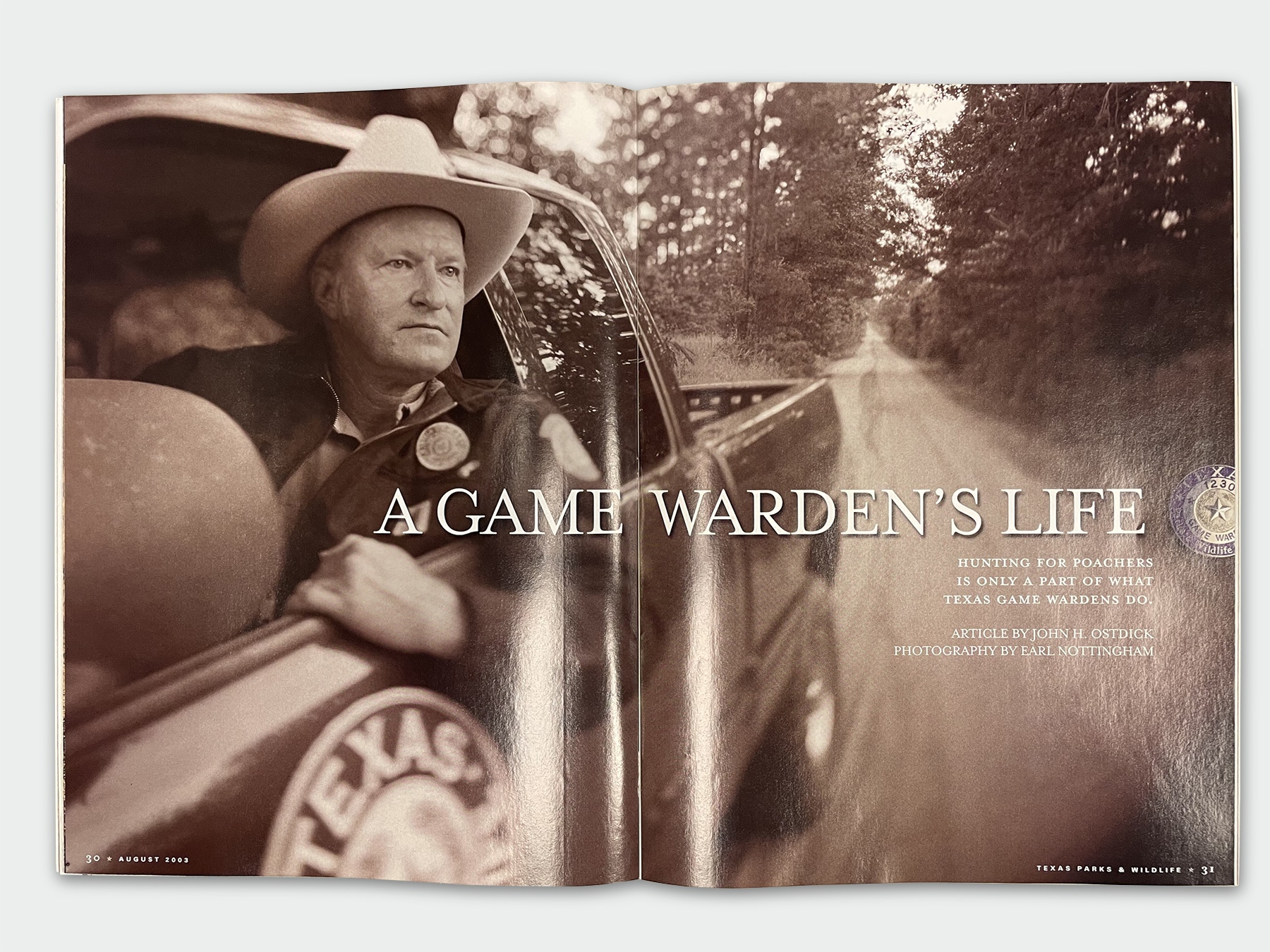
His family also grew up reading Texas Parks & Wildlife Magazine, and one story had a profound impact on him during his senior year of high school. According to Hummert, “Growing up, we had a subscription to Texas Parks & Wildlife Magazine, and there was an article called ‘A Game Warden’s Life.’ It seemed like a really interesting job, getting to be outdoors and give back to the hunting and fishing community that I had been a part of most of my life.”

Hummert went on to pursue his bachelor’s degree in criminal justice from Tarleton State University in Stephenville, Texas. In 2004, he applied and was selected for the Texas Game Warden Summer Internship. “I got to spend all summer riding with the game wardens in Region II, all around the Dallas-Fort Worth area and up north to Lake Texoma. After spending the summer on the lake, boating and learning the job, I decided this was definitely the job I wanted to do.”

After graduating from the Game Warden Training Academy in 2008, he received his first assignment. “My first duty station was in Laredo for two years. Then I was transferred to Grayson County, so I went from South Texas to far North Texas, and I stayed there for eight years.”

“My wife and I met at college in Stephenville, so we had always said that if a spot in Erath County came up, we would put in for it. In 2018, the county came open, so I put in for it and got it! We moved and have been here ever since.”

Hummert and his wife are now raising their own family just west of Hummert’s hometown, and now he gets to pass down his and his dad’s favorite pasttime by taking his 10-year-old son fishing. “My son loves fishing, and that’s primarily what we do now.” His 7-year-old daughter, however, may need more convincing. “My daughter also likes to fish some, but she’s really into gymnastics, so that’s her favorite thing at the moment.”

Has his experience lived up to his expectations after reading that game warden article back in high school? “I would say definitely so. Still the best job in law enforcement as far as I’m concerned! The good part about our job is that it constantly changes. Right now, it’s summertime and it’s hot, and it’s tiring to be on the lake day in and day out, but dove season is right around the corner, and then deer season. It helps to keep you from getting burned out because what we are doing constantly changes.”

And change hasn’t only come with the seasons. Since becoming a game warden 15 years ago, technology has also proven to be a game-changer out in the field and in Hummert’s everyday duties. “When I first started, drones weren’t even a thing, and now we’ve had the drone department since 2018, which I’ve been a part of for a little over a year.”

As part of Texas Parks and Wildlife Department’s Unmanned Aircraft Systems (UAS) program, Hummert is an FAA-licensed remote pilot, and he has a drone on hand and ready to go for any mission, including lifesaving search and rescue efforts. “I had a missing person case in Callahan County in June, and the family and sheriff’s office had been searching for a family member with special needs for 4 ½ hours, and we were able to find him in less than 30 minutes.”

“They are such a powerful tool. Who would’ve thought ten years ago that we’d have these little mini helicopters. We are able to get these drones out there in the field, throw them up, and get straight to work.” And, over time, drones have been used for more efforts than just search and rescue. “I’ve responded to several brush fires in the county. I’ve been able to fly an overwatch for the fires, which allowed our emergency management coordinators to watch the live stream so they can decide where they need to allocate their resources. I’ve also done aerial crash mapping for the local highway patrol troopers, and I even helped with an unfortunate string of bomb threats at the local school by checking the rooftop and keeping an eye in the sky for anything unusual.”

Through the generosity of donors, Gear Up for Game Wardens has helped Texas Game Wardens keep the UAS program going strong by providing the vast majority of the drones in their arsenal. Donors have also helped secure other vital specialty equipment your Texas Game Wardens need to maintain safety and ensure the highest level of service for the people of Texas, including all-terrain vehicles, airboats, funding to replace retiring K-9s, and more.

“The support from the Gear Up for Game Wardens program shows that we have the public’s support behind what we do. It makes me proud to be a game warden. Having so many people supporting us and ensuring we have the equipment that we need is a great thing. There are really no words to adequately describe it, but it’s appreciated beyond measure.”

Meet Texas Game Warden K-9 Lola

By | Features

Texas Game Warden Scott Kirkpatrick loves his job, and especially that he gets to go to work every day with his K-9 partner Lola.

“She’s with me 24/7,” said Kirkpatrick, who works out of Johnson County in North Texas. “I just never know when I will get a dog call, so she’s with me anytime I am working.”

When Kirkpatrick first met Lola, she was a 6 1/2 -week-old puppy. At the time, Kirkpatrick didn’t know that she would end up being his partner. Kirkpatrick was fostering her as part of a puppy program started by several K-9 officers in Texas, Maine and Colorado. As Kirkpatrick got more involved in the network of K-9 officers across the country, they realized there was a need to train puppies in preparation for K-9 careers. Several officers across the country, including Kirkpatrick, volunteered for foster duty.

“When I was fostering her, Lola went everywhere with me to get her used to every kind of environment, from a rural pasture to a crowded Home Depot,” he said. “She quickly demonstrated that she had the drive and other characteristics that would make her a good K-9.”

As Kirkpatrick pondered the pending retirement of his K-9 partner, Ray, he realized his next partner was right underfoot.

“I have to admit I’d grown kind of attached to Lola, and I really liked the way her training was progressing,” he said. “I had started with her on some tracking exercises, and she just took that up like crazy. She just loves to work and her drive and energy are very high. So, I threw a pitch at my captain to see if I could keep her.”

Thanks to a Gear Up for Game Wardens K-9 fund, dollars were readily available to make the purchase, and Lola became an official member of the Texas Parks and Wildlife Department’s K-9 team.

Gear Up for Game Wardens is a Texas Parks and Wildlife Foundation (TPWF) program which provides specialty gear for Texas Game Wardens through private donations. While the state provides the basic necessities for game wardens to do their jobs, there is still a critical need for additional equipment. Thanks to the support of generous Texans, TPWF helped launch the Texas Game Warden K-9 team in 2013 and is providing ongoing support for the purchase of new dogs and related gear.

In April 2022 at 14-months old, Lola was certified in Police Search and Rescue with Texas Parks and Wildlife Department. In September of 2022, she certified in Trailing with the North American Police Working Dog Association. On November 3, 2022, Lola was officially commissioned as a K-9 officer at a Texas Parks and Wildlife Commission meeting in Austin, along with five of her K-9 colleagues.

Lola’s search and rescue training paid off for a frightened and lost little boy and his frantic family in mid-November 2022. Kirkpatrick got a call from Cedar Hill State Park, where a boy had been missing overnight. Kirkpatrick and Lola headed to the wooded area where he had last been seen, and Lola got to work.

“I saw her nose go down to the ground in a tracking behavior and she just took off,” said Kirkpatrick. “I just tried to keep up with her as best as I could, running through the brush and ducking down to avoid branches along the way. And then l looked up and there she was, just sitting right over there beside him.”

The little boy was safe and sound, and Lola had her first search and rescue mission under her collar.

“Of course, she got a treat after that successful rescue,” said Kirkpatrick.

Kirkpatrick looks forward to working with Lola for the next eight or nine years, the average work life of a K-9. She will continue to hone her skills, while working alongside her human partner, who she adores.

“She’s very affectionate and just loves to get in your business. She gets very vocal when I’m trying get the harness on her to track something. She gets very excited about that. And when we are at home, I don’t get to do anything without her. If I’m going somewhere to run errands or whatever, she’s coming with me.”

Kirkpatrick appreciates the ongoing support the K-9 program receives from Gear Up for Game Wardens.

“Our program simply would not be where it is today if it was not for Gear Up for Game Wardens and the generous donations from the public. We are immensely grateful for their support.”

Meet Texas Game Warden Lance Lindley

By | Features

Lance Lindley grew up in the Panhandle town of Shamrock and lived across the street from a Texas Game Warden. He idolized him. Lindley loves to hunt and fish and spent lots of time growing up on Lake Meredith, where he was envious of the game wardens doing water safety patrols.

“I thought it would be so awesome to get paid to do that, but everyone told me it was impossible to get into the Game Warden Academy, so I didn’t even try when I graduated from college,” said Lindley.

Armed with a biology degree from West Texas A&M, Lindley landed a job with an environmental services company in Austin. He did that for a couple of years, and decided it was not the career path he wanted to pursue.

It took him two tries, but with the encouragement of the very game warden and family neighbor who first inspired his interest in the field, he made it into the Texas Game Warden Academy in 2005. His first duty station was Pecos County near Fort Stockton, where he served for three years. Wanting to get closer to home, he transferred to cover Hutchinson and Carson counties near Amarillo, where he’s been ever since.

“I love being a Texas Game Warden. The freedom of the job is probably the best thing about it. We work our own schedule, when we think it’s most important to be out there. And of course, being outdoors is a great perk, too.”

Texas Game Wardens are deeply connected to their communities, and many, like Lindley, choose to go back to their home ground. They get to know civic and business leaders, along with the landowners whose ranches they patrol.

Lindley got to know the plant manager of the Phillips 66 refinery in Borger at volleyball games where both their daughters played. The manager invited local law enforcement agencies for a plant tour, and he asked them to let him know if they ever needed any equipment, because Phillips 66 would like to support them.

As it turns out, Lindley had just been issued a new boat, but there weren’t enough funds to fully equip it. Phillips 66 stepped up with a donation through Gear Up for Game Wardens, and the boat was outfitted with the needed gear, including a side-scan sonar.

Gear Up for Game Wardens is a Texas Parks and Wildlife Foundation program that provides specialty gear for Texas Game Wardens through private donations. The following year, Phillips 66 stepped up again to purchase a thermal drone for Amarillo-area game wardens, which has been used numerous times since for search and rescue missions.

This year, Phillips 66 donated $30,000 through Gear Up for a brand-new climate-controlled UTV.

“We spend a lot of time patrolling in rough and dusty areas, like the Canadian River off-road areas, in the dead of winter and the blazing heat of the summer,” said Lindley. “We are so grateful to Phillips 66 and Gear Up for Game Wardens for providing this equipment that will allow us to do our jobs more safely and effectively.”

Cooking up a Fundraiser for Gear Up for Game Wardens

By | Features

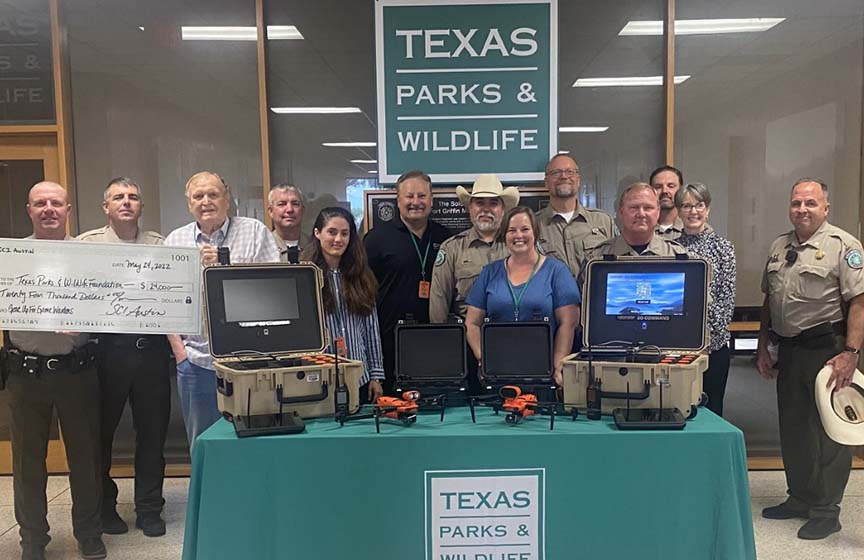
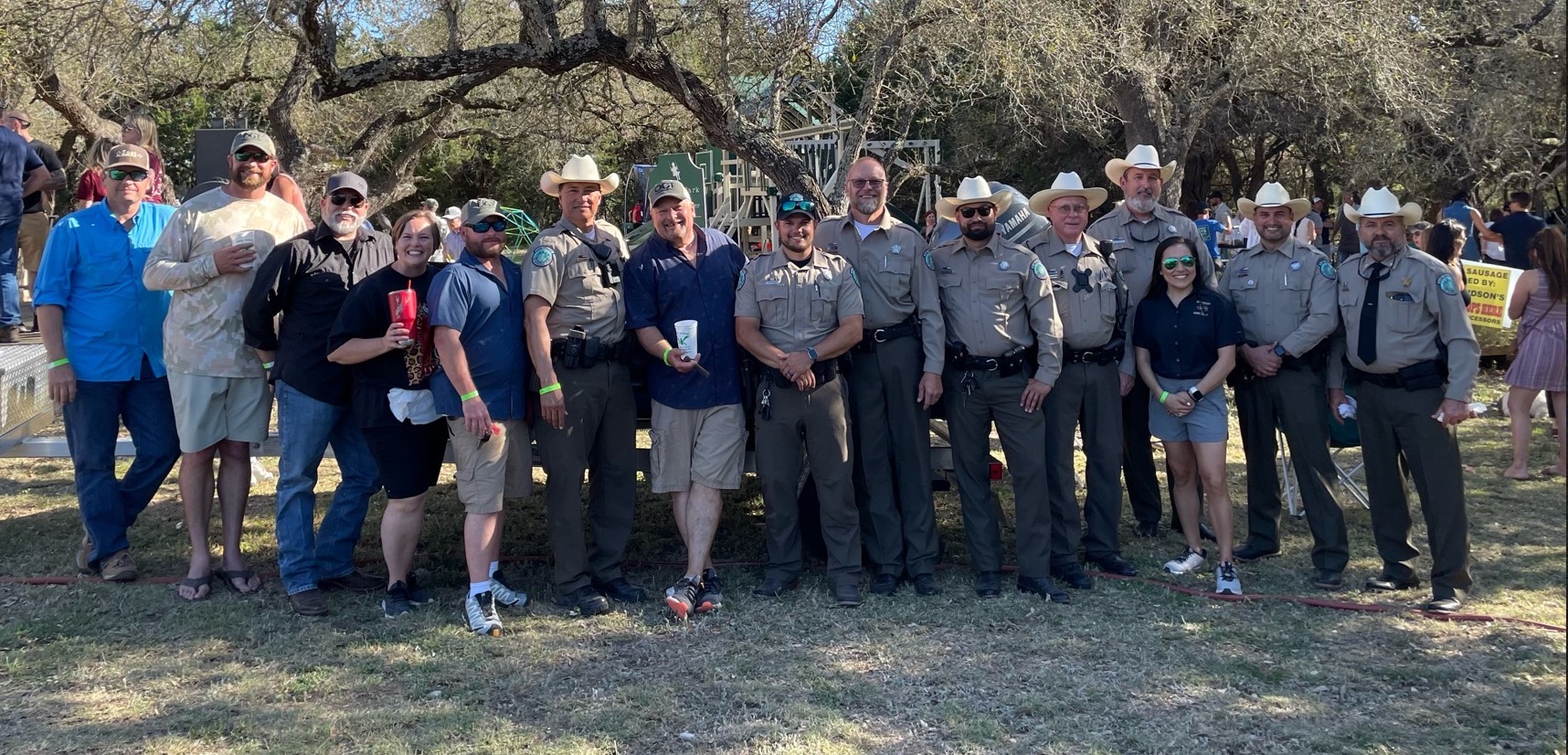
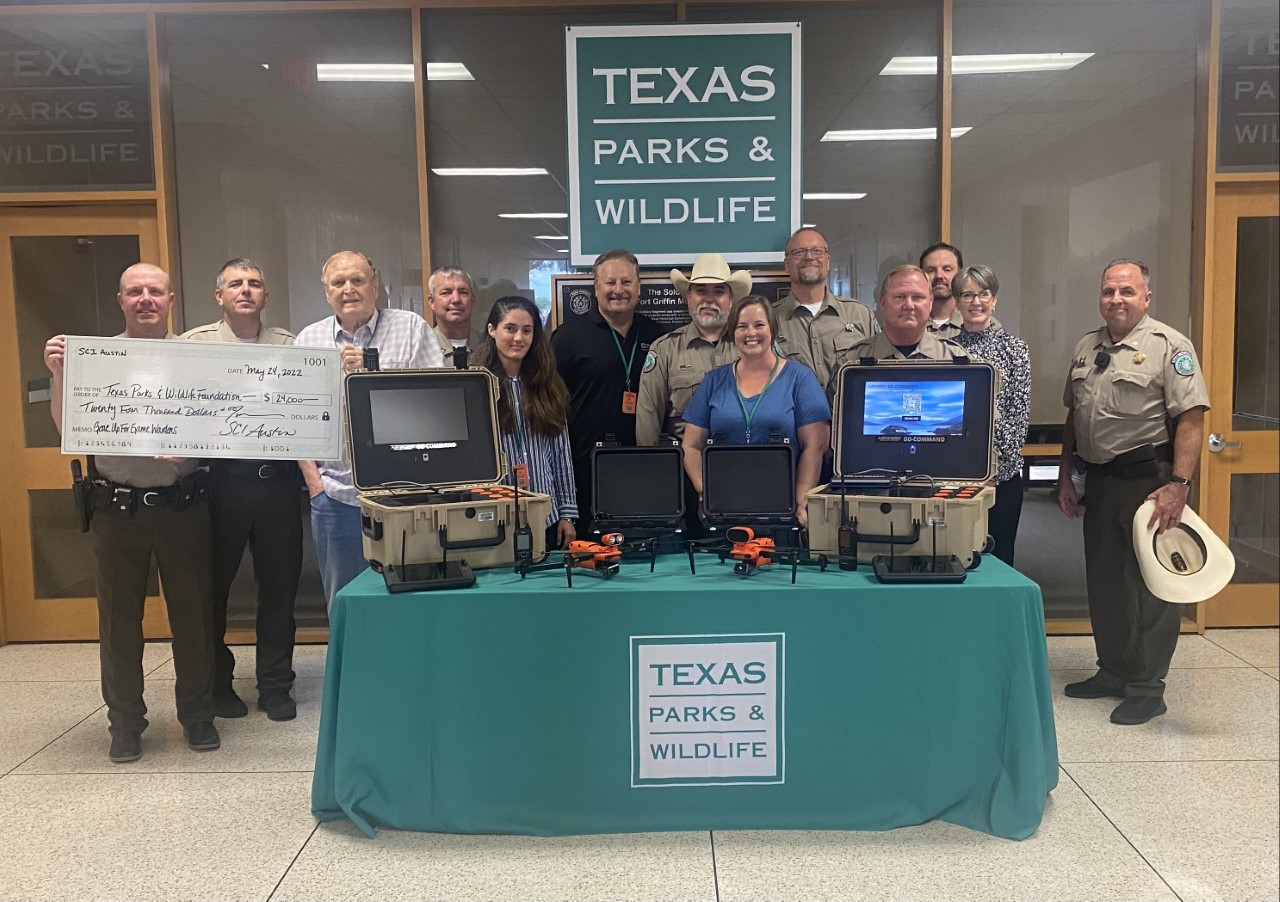
Stephanie and Jerel Wottrich love crawfish. In fact, at a recent special event held at their ranch in Driftwood, together with the Safari Club International (SCI) Austin cook team, they boiled up 1,000 pounds of the tasty crustaceans, accompanied by gallons of gumbo, 600 venison sausages, 18 smoked turkeys, and a whole roasted pig.

The event drew hundreds of hungry people, all for a good cause. Proceeds from the annual event benefit Gear Up for Game Wardens, a Texas Parks and Wildlife Foundation program that raises private funds for specialty gear for Texas Game Wardens.

Stephanie and Jerel love to hunt and fish, and they are active members in Safari Club International. Jerel serves as president for SCI’s Austin chapter, and Stephanie is vice-president. Stephanie also serves as the regional rep for four chapters in Texas.

They’ve been doing a crawfish boil for several years now, and, in 2018, decided to make the event an SCI-Austin chapter fundraiser for the Gear Up program.

“We’ve always wanted to give back to the game wardens who do so much to conserve the natural resources of Texas,” said Stephanie. “When we learned about Gear Up, we decided it was a perfect fit. We want to help Texas Game Wardens get the specialty equipment they need, and we also want to expose more people to all that game wardens do to protect the wildlife and the people of our state.”

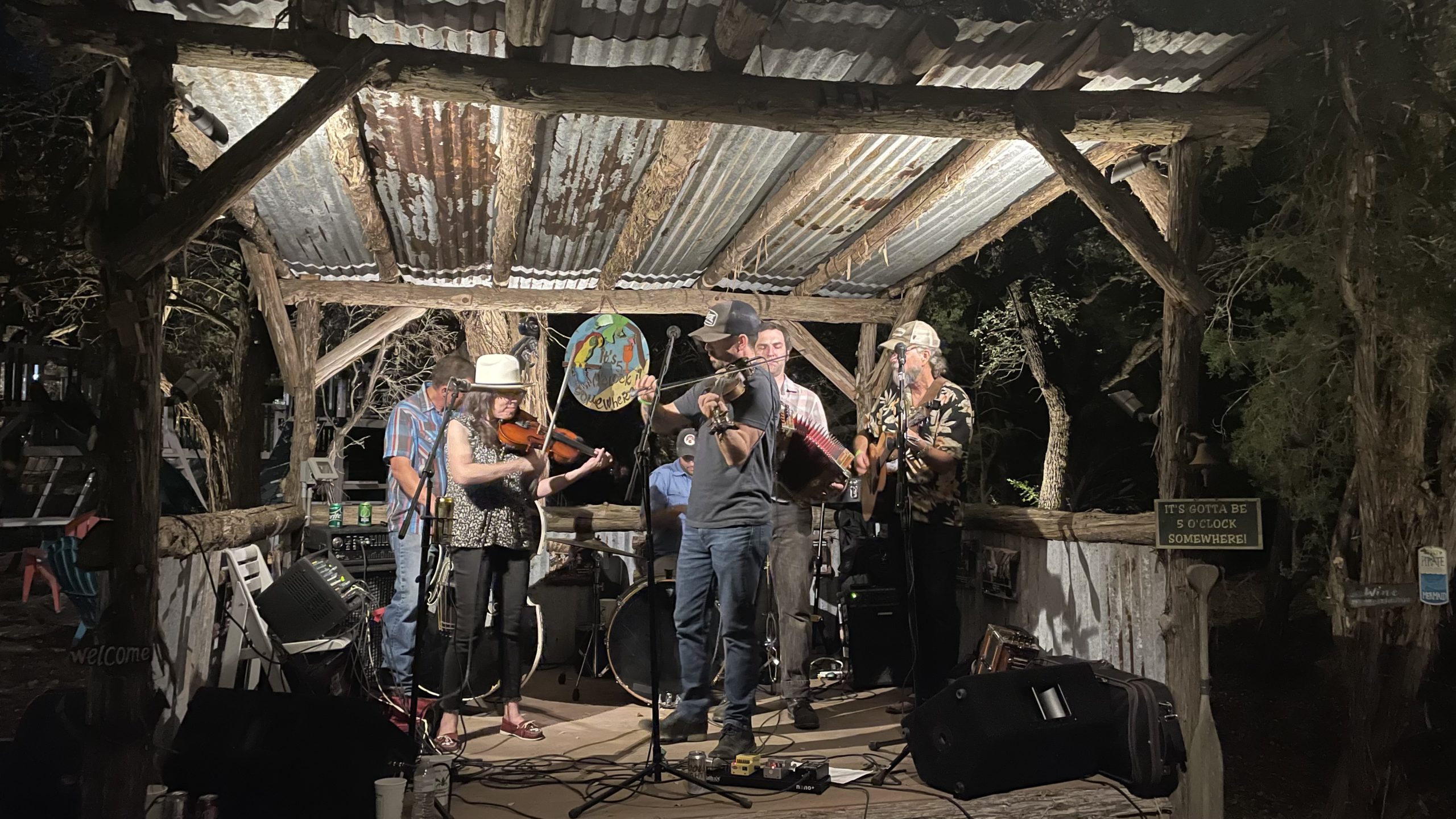
Besides delicious food, the all-day event featured family-friendly activities, including live music, a falconry demonstration, and much more. Texas Game Wardens were also on hand to educate folks about what they do and how they use specialty equipment in their day-to-day jobs.

“A lot of people just don’t know all that Texas Game Wardens do,” said Stephanie. “Besides enforcing hunting and fishing laws, game wardens play a huge role in swift water rescue during natural disasters and rescuing people who get lost or injured.”

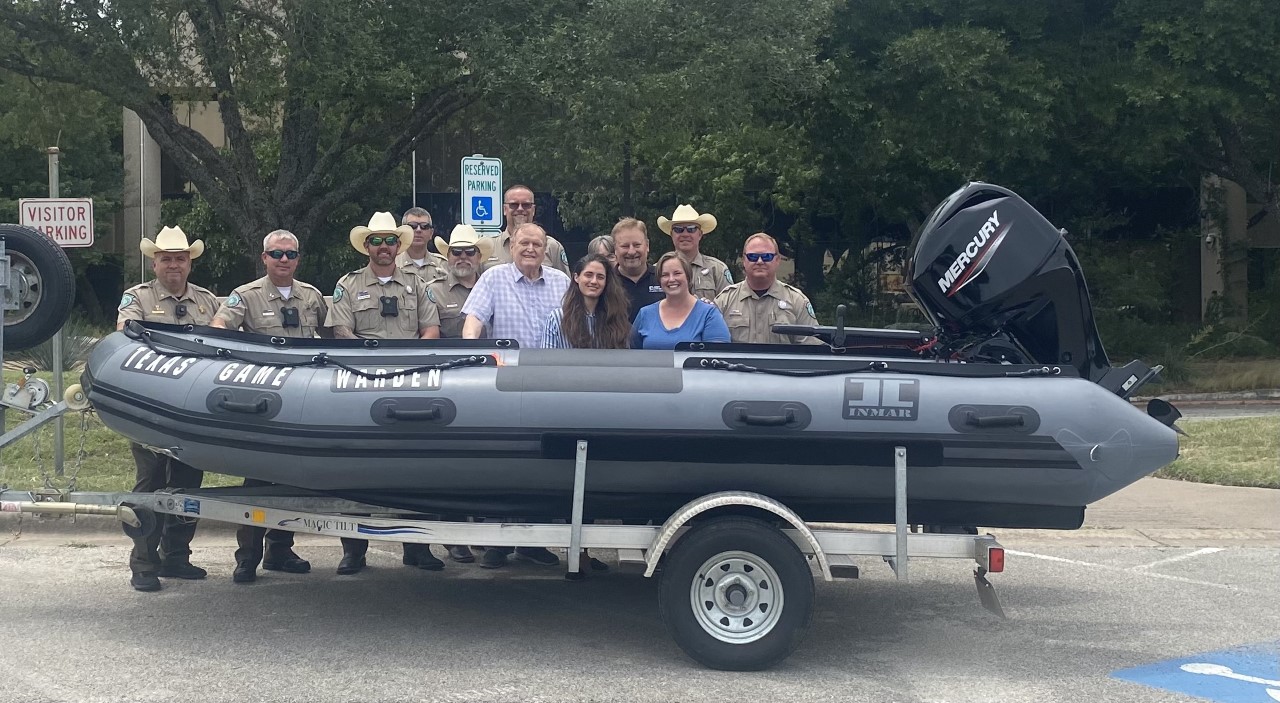
Last year’s event raised $20,000, which went toward purchasing a swift water rescue boat. This year, the event raised $24,000, which funded two search and rescue thermal drones.

Thermal drones can make the difference between life and death in a rescue situation. Just one example is the 2019 rescue of an elderly man suffering from dementia and mobility issues who wandered off on a cold winter day in Montague County. Texas Game Wardens were called in, and they utilized a thermal drone to help find him in heavy brush. The heat signature generated by his body heat enabled rescuers to quickly hone in on his exact location and get him home safely.

“These specialty tools like thermal drones will generally be utilized when somebody is having their absolute worst day,” said Texas Game Warden Major Jim Ranft. “We are so grateful to have the support within the community to provide these tools that help save lives. It’s a reflection of the fine people that are members of the Austin SCI chapter and their support of protecting not only the resources, but the public and law enforcement.”

Plans are already in the works for next year’s event, which will be held Saturday, April 1, 2023.

“This started out as a little crawfish boil for some of our friends,” said Jerel. “It’s grown every year since we made it a fundraiser for Gear Up for Game Wardens. It just keeps getting bigger and better, and we are proud to support our Texas Game Wardens.”

Meet Texas Game Warden Calvin Harbaugh

By | Features

Calvin Harbaugh has been a Texas Game Warden for decades. Like most game wardens, he is an avid hunter and angler who loves spending time outdoors.

He was introduced to hunting and fishing by family members when he was very young. A close relative took him fishing when he was but a toddler, and he got his first BB gun at age eight. Soon after, he was introduced to hunting by the same treasured mentor.

“My Aunt Helen just loved all things outdoors, and I spent a lot of time fishing and hunting with her growing up,” said Harbaugh. “We spent a lot of time together in a deer blind on a hunting lease south of San Antonio. I shot my first deer with her, when I was 11 years old.”
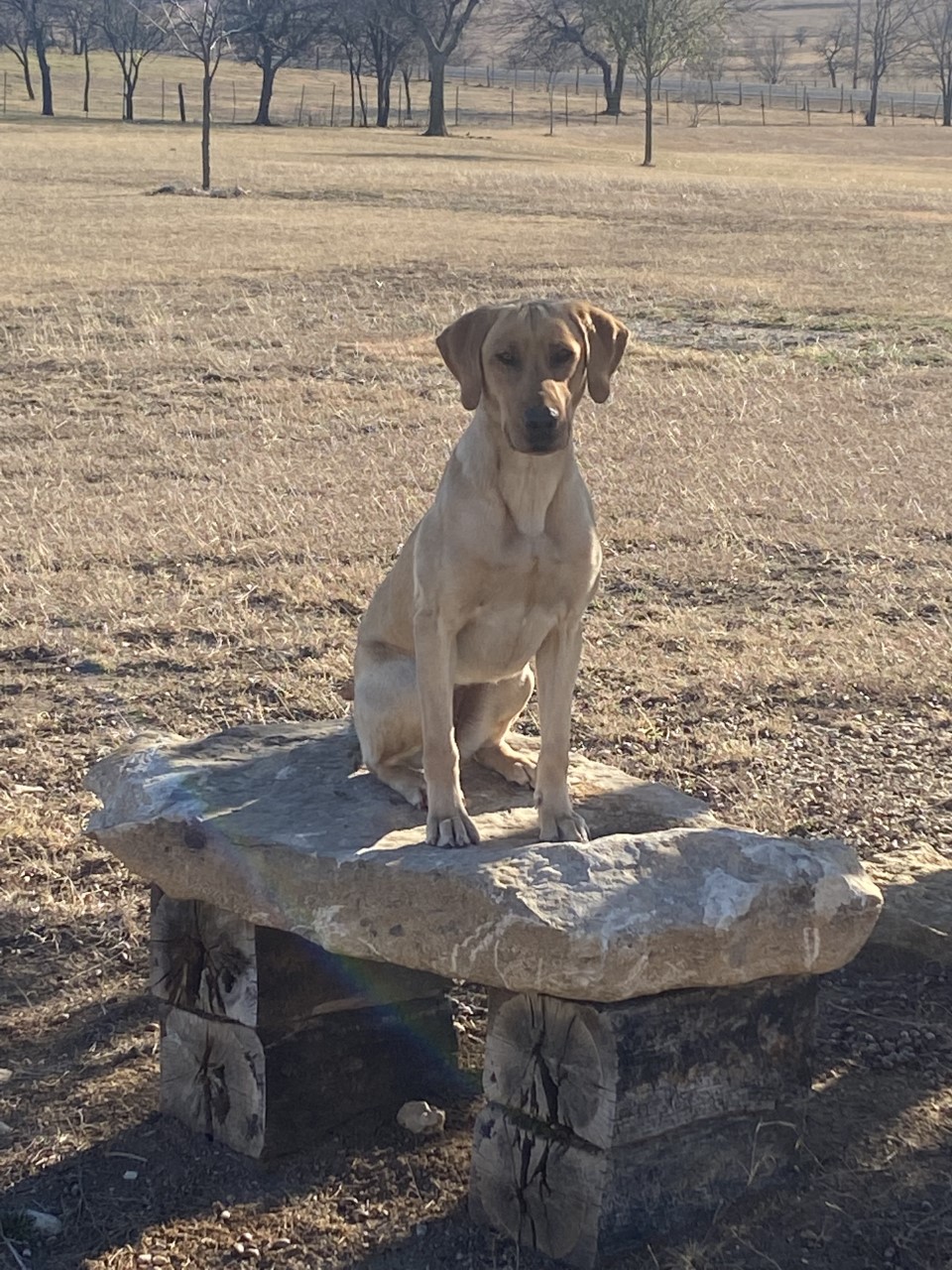
In fact, the first time Harbaugh encountered a Texas Game Warden, he was in a hunting blind with his aunt, Helen Palmer. The game warden had seen the ranch gate open and was checking to make sure everything was all right.

Photo by Jonathan Vail

While Harbaugh remembers meeting that game warden, he didn’t exactly have a career epiphany at the time. When he graduated high school, he headed to Texas A&M with an initial interest in becoming a wildlife biologist.

“I started out in wildlife and fishery science, but I did not do so well in the chemistry classes,” he recalled with a laugh. “I changed majors and graduated with a rangeland ecology and management degree instead.”

After college, as he explored career options, he had another encounter with a Texas Game Warden, whom he met in a San Antonio field office for the Texas Parks and Wildlife Department.

“I wanted to see if I could learn more about becoming a game warden and met a man named John Caudle,” he said. “I didn’t realize it at the time, but he was the regional director over all the game wardens in that part of the state. I just thought he was an older game warden who got stuck in the office. It was after meeting him that I realized that I definitely wanted to be a game warden.”

After that, Harbaugh did a couple of ride-alongs with Texas Game Wardens. He applied to the Texas Game Warden Academy, got in on his first try, and after close to 30 years as a field game warden, he’s now one of the old guys. But he’s definitely not stuck in the office.

“I think what I like most about being a Texas Game Warden is the freedom of the job and that I am outdoors pretty much every day,” said Harbaugh. “There’s something different every day, and I really enjoy serving the public. I have been really fortunate to get into something that gives me purpose and that I have so thoroughly enjoyed these many years.”

Hurricane Harvey / Photo by Earl Nottingham

Harbaugh started his career on the coast and moved inland soon after. Now he’s stationed in Fayette County near La Grange and has been there for more than 16 years. He’s a seasoned airboat operator and has been in just about every situation known to a game warden, including search and rescue operations for Hurricane Harvey in 2017.

“We were all over Houston in the days following the storm, and I couldn’t tell you how many people we moved out of harm’s way,” he said. “We were just doing our job, helping and protecting people, which is what game wardens do.”

Harbaugh was also among the Texas Game Wardens who came to the aid of Louisiana residents during Hurricane Katrina in 2005. The equipment used by Texas Game Wardens in situations like Harvey or Katrina can mean the difference between life or death for both game wardens and the people they are charged with serving.

Hurricane Katrina / Photo by Earl Nottingham

Providing up-to-date equipment for the 550 Texas Game Wardens scattered across the state is a constant challenge for the Texas Parks and Wildlife Department. While the state provides the basic tools game wardens need, there’s an additional need for specialized equipment. That’s why Texas Parks and Wildlife Foundation, the state agency’s official nonprofit partner, launched Gear Up for Game Wardens in 2017. Through private donations, Gear Up for Game Wardens provides specialty equipment Texas Game Wardens need to maintain safety and ensure the highest level of service for the people of Texas.

Texas Game Warden Calvin Harbaugh with Randy Fowler / Photo by Jonathan Vail

In late 2021, Calvin Harbaugh took possession of a brand-new Patriot airboat outfitted for the rigors of game warden work. Funding to purchase the airboat was donated through Gear Up for Game Wardens by Ann and Randy Fowler in memory of Dan Duncan.

“It’s hard for me to put into words how grateful we are to receive this gift,” said Harbaugh. “We use an airboat all the time for our regular patrol duties like checking duck hunters or fishermen on the river. But we also use it during search and rescue operations, and it will no doubt be used for the next hurricane that hits Texas. Having the latest equipment helps ensure we can do our jobs safely and effectively for the people of Texas.”